

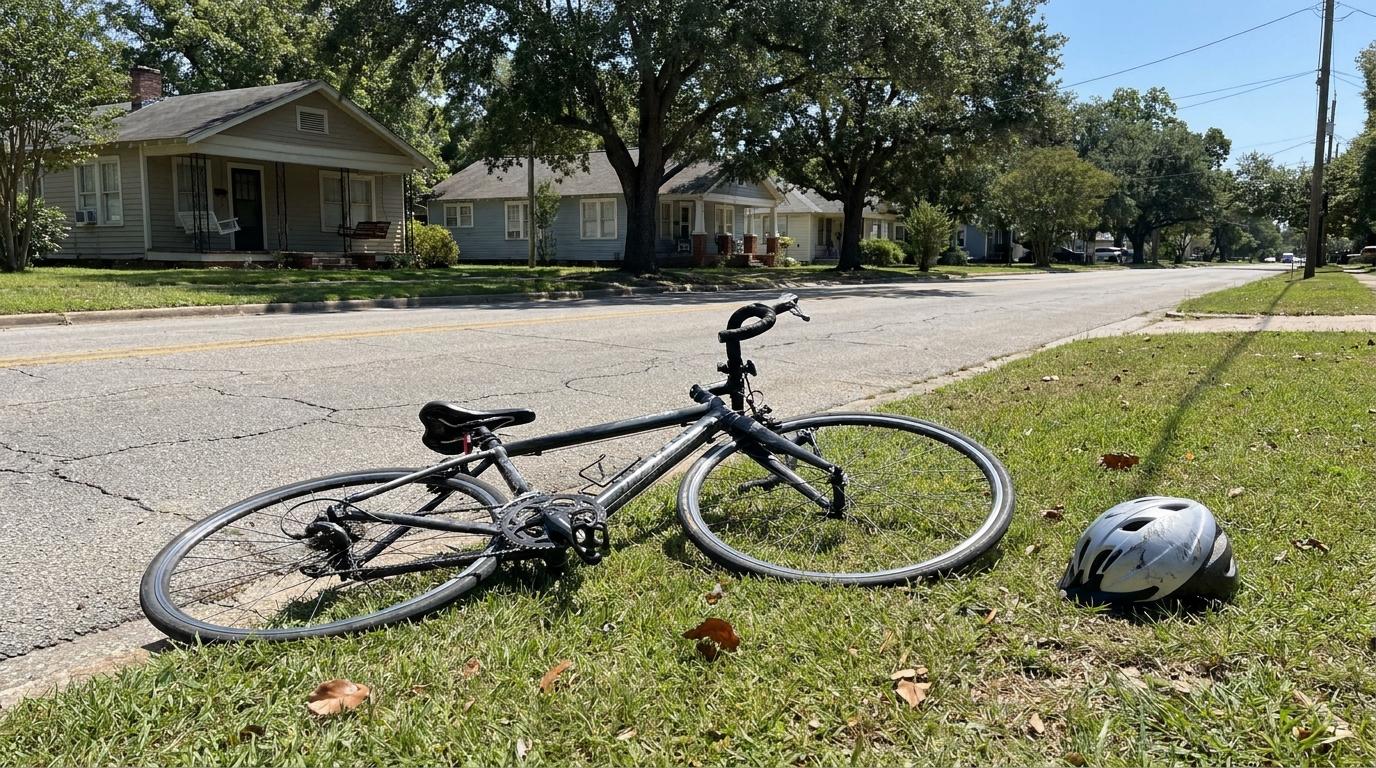
Yes, in most cases you can still sue after a bicycle hit-and-run in Louisiana, even when the driver is arrested. The criminal case and your injury claim are separate. An arrest may help prove what happened, but it generally doesn't pay your bills, and your filing deadline keeps running while the criminal case moves forward.
Can you sue after a bicycle hit-and-run in Louisiana if the driver is arrested?
Generally, yes. An arrest means police believe they found the person who left the scene. That can make an injury claim easier, because you now have someone to hold responsible. But the arrest does not file a claim for you, and it does not guarantee anyone will pay.
It helps to picture two separate tracks. The criminal track is the State of Louisiana against the driver. The civil track is you against the at-fault person and, usually, an insurance company. Each track has its own rules, its own proof standards and its own timeline.
This question comes up often after news like a recent report from Shreveport, where police made an arrest in a felony hit-and-run that left a bicyclist with life-threatening injuries. Families in that spot often assume the criminal case will take care of the hospital bills. In most cases, the criminal case alone won't pay those bills.
That gap is the reason this guide exists. Below, you'll see what usually happens after an arrest, how Louisiana law treats these crashes, where the money for your care may actually come from, and the steps that protect your claim.
What usually happens after a hit-and-run driver is arrested?
Usually, the person is booked, charged and often released on bond while the case moves through criminal court. That process can take many months. Meanwhile, your medical bills arrive on their own schedule, and the criminal court does not pay them as they come in.
Here is a common sequence after a hit-and-run bicycle crash in Louisiana:
- 01. Police investigate. Officers gather scene evidence, vehicle parts, camera footage and tips. In Shreveport, that is often the Shreveport Police Department. On interstates like I-20 or I-49, Louisiana State Police may handle it.
- 02. An arrest is made. The person is booked on one or more charges, such as hit-and-run driving.
- 03. The district attorney decides on formal charges. In most of Shreveport, that is the Caddo Parish District Attorney's office. Other parishes have their own district attorneys.
- 04. The case moves through court. There may be hearings, a plea deal or a trial.
- 05. Sentencing happens if there is a conviction or guilty plea. The sentence may include restitution, which means a court order that the defendant pay the victim back for certain losses.
Restitution sounds like it solves the problem, but it often falls short. It generally depends on a conviction or plea first. It is often tied to set out-of-pocket losses rather than the full harm you suffered. And it only helps if the person can actually pay.
Plea deals are common, too. A defendant may plead to a lesser charge, or a charge may be dropped. That does not decide your injury claim. Your claim is judged on its own evidence in civil court or through insurance.
How does Louisiana law look at a hit-and-run bicycle crash?
Louisiana law treats leaving the scene of a crash as a crime, treats a cyclist much like other road users, and handles your injury claim as a separate civil matter. The criminal statutes punish the driver. The Civil Code decides whether you can recover money for your injuries.
These are the main laws that often come into play. You can read the full text of each one through the Louisiana State Legislature's law search.
- Hit-and-run driving: La. R.S. 14:100 makes it a crime for a driver involved in a crash to leave without stopping, giving their identity and offering reasonable help. Penalties are tougher when someone is seriously hurt or killed.
- Bicycles on the road: La. R.S. 32:194 says people riding bicycles have the rights and duties that apply to drivers of vehicles, with some exceptions.
- Fault: Civil Code Article 2315 says a person whose fault causes damage to another must repair it. This is the base of most injury claims.
- Shared fault: Civil Code Article 2323 deals with comparative fault, meaning how blame is split when more than one person is at fault.
- Filing deadline: Civil Code Article 3493.1 sets the time limit to sue for injuries.
- Uninsured motorist coverage: La. R.S. 22:1295 covers how uninsured motorist (UM) insurance works in Louisiana.
Criminal case vs. injury claim
| Criminal case | Your injury claim | |
|---|---|---|
| Who brings it | The State, through the district attorney | You, the injured cyclist |
| Main goal | Punish the driver | Pay for your losses |
| Proof needed | Beyond a reasonable doubt | More likely than not |
| Who pays you | Possibly the defendant, through restitution | Usually an insurance company |
| Timeline | Set by the criminal court | Set by the civil deadline |
The proof difference matters a lot. A criminal conviction needs proof beyond a reasonable doubt, the highest standard in law. An injury claim generally needs proof that something is more likely true than not. So a not-guilty verdict does not automatically end your claim.
Recent tort reform changes
Louisiana changed several injury rules in 2025. Under Act 15 of 2025, effective January 1, 2026, a person who is 51% or more at fault generally recovers nothing. If you are less than 51% at fault, your recovery is generally reduced by your share. Under the older rule, a partly at-fault person could still recover a reduced amount even if mostly at fault.
This matters for cyclists because insurers sometimes argue the rider shares blame. For example, they may point to riding at night without lights or riding against traffic. How fault is split always depends on the facts.
Act 466 of 2025 also took effect January 1, 2026. It generally limits past medical expenses to amounts actually paid, rather than the full amount billed. Both changes generally apply going forward, to crashes on or after January 1, 2026, while earlier crashes generally follow the older rules. It is worth confirming which version covers your crash date on legis.la.gov.
The filing deadline
Louisiana calls a filing deadline prescription. For injuries on or after July 1, 2024, you generally have two years from the crash to file suit under Civil Code Article 3493.1 (added by Act 423 of 2024). Injuries before that date generally had a one-year limit. The criminal case does not pause this clock.
Does the criminal case pay your medical bills?
Usually not, at least not quickly or fully. The criminal court's job is to decide guilt and punishment. Paying for your care generally comes through insurance, a civil claim or both.
Drivers who flee sometimes have a reason to run, such as no insurance, a suspended license or another legal problem. Those same reasons can mean the person has little money to pay restitution or a court judgment.
So while the arrest may help prove who was at fault, payment often has to come from somewhere else. That is where your own insurance can matter more than people expect.
How can uninsured motorist coverage help an injured cyclist?
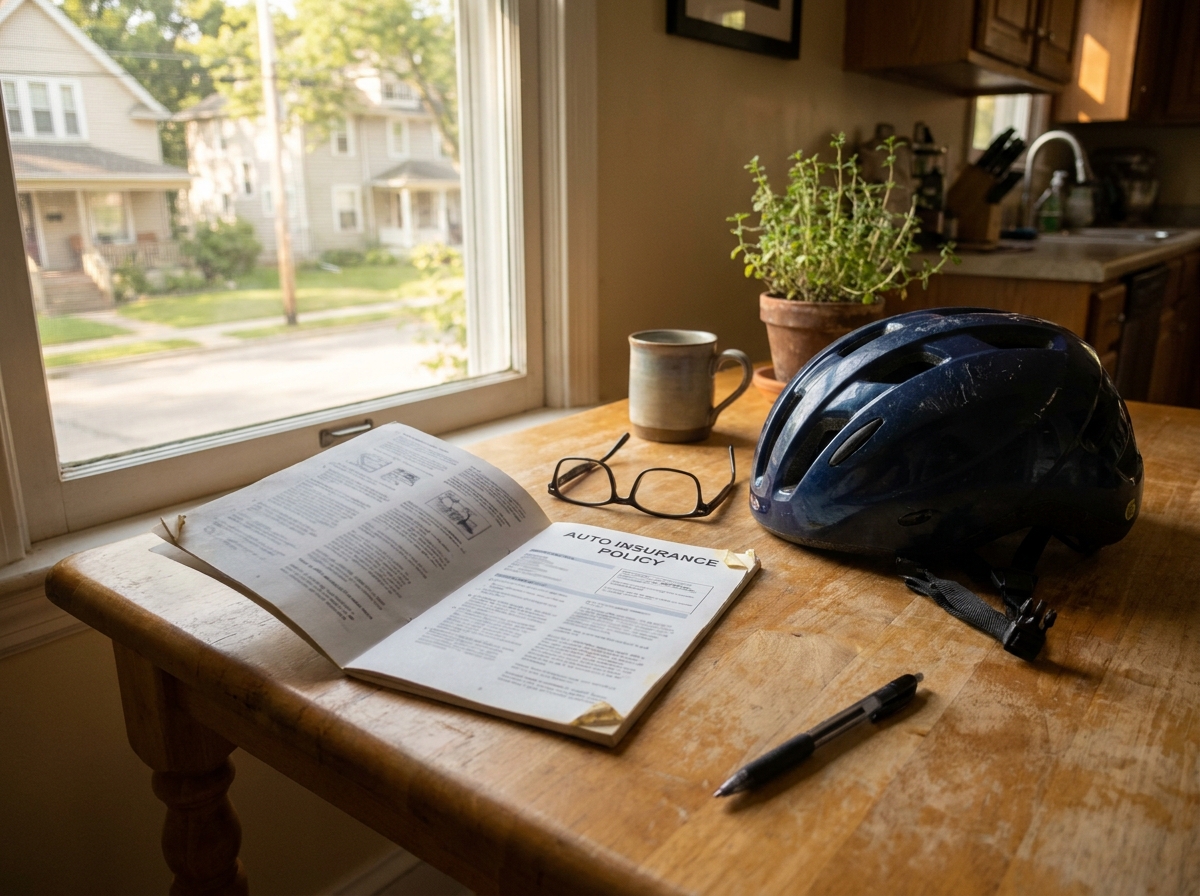
Uninsured motorist (UM) coverage on your own auto policy may pay when the at-fault driver has no insurance, too little insurance or was never found. UM coverage may apply even when you were on a bicycle, not sitting in your car, depending on your policy's wording.
 Do I Have A Case?Answer a few quick questions about your accident.Check My Case
Under La. R.S. 22:1295, Louisiana insurers must include UM coverage in auto policies unless the policyholder rejected it in writing on an approved form. Many people don't know whether they have it. Your policy's declarations page usually shows your UM limits.
Depending on the policy, UM coverage may also protect relatives who live in your household. So a teen or adult child who rides a bike may be covered under a parent's auto policy. The details depend on the exact policy terms.
Here is how the pieces often fit together once someone is arrested:
- If the at-fault person had liability insurance, a claim usually goes against that policy first.
- If that coverage is too small, your UM coverage may help fill the gap.
- If there was no insurance at all, your UM coverage may be the main source of payment.
- If no one was ever identified, UM may still apply, but special proof rules can come into play, especially when there was no contact between the vehicle and your bike.
Other sources may help with costs too. Your health insurance, any medical payments (MedPay) coverage on your auto policy, and Louisiana's Crime Victims Reparations program may each play a role. Whether the reparations program helps depends on its eligibility rules, so check with it directly. The Louisiana Department of Insurance also offers consumer help if you have trouble with an insurer.
What should you do, step by step, after a bicycle hit-and-run?
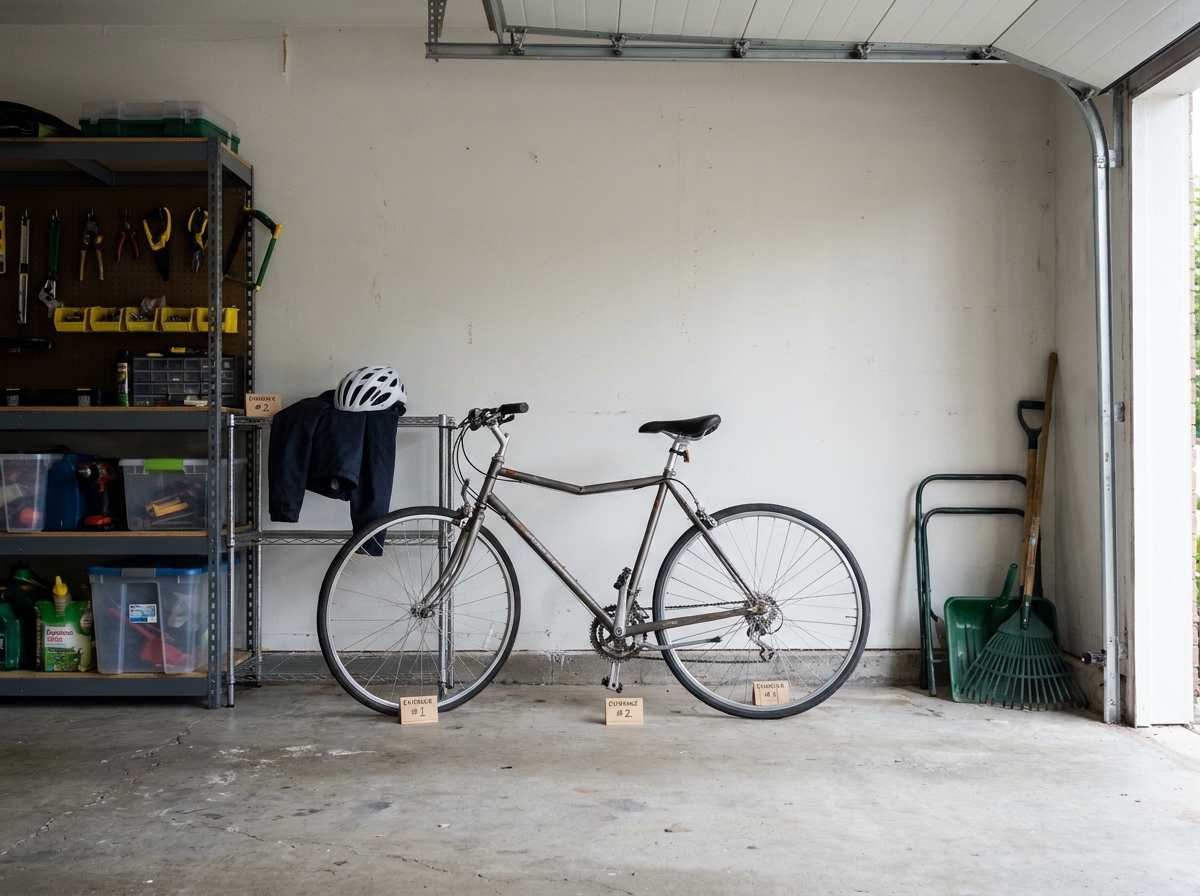
Start with medical care, then protect evidence, report to your own insurer and track your deadline. The steps below are general and may not fit every situation. They are a starting point if you or a family member was hurt.
- 01. Get medical care and follow through. See a doctor right away, even if you feel okay. Symptoms of some injuries, like head trauma, may not show up right away. Keep every follow-up visit.
- 02. Get the police report. Ask for the report or item number from the agency that responded. Note the officer's name and the case number for the criminal charge.
- 03. Notify your own auto insurer promptly. Many policies require quick notice for UM claims. Ask what coverage you have, including UM and MedPay.
- 04. Keep the bike, helmet and clothing as they are. Don't repair or throw away damaged gear. It can show the force of the crash and where the impact happened.
- 05. Photograph everything. Take pictures of your injuries over time, your bike and the scene. Note nearby businesses or homes with cameras, since footage may be recorded over within days or weeks.
- 06. Write down what you remember. Include the time, place, lighting, the vehicle's color or type, and any witnesses. Memory fades fast after a serious crash.
- 07. Track your costs. Save medical bills, receipts, mileage to appointments and records of missed work.
- 08. Stay in touch with the victim advocate. District attorney offices often have victim assistance staff. They can tell you about court dates and how to request restitution.
- 09. Mark your filing deadline. Put the date on your calendar now. Don't wait for the criminal case to tell you when to act.
If you ride often, the NHTSA bicycle safety page has practical tips on lights, visibility and sharing the road once you're back on your bike.
What mistakes can hurt a bicycle injury claim?
One of the most common mistakes is waiting for the criminal case to finish before doing anything about your injury claim. Other problems include early recorded statements, gaps in treatment and losing evidence. Each one can make a valid claim harder to prove.
- Waiting on the criminal case. Criminal cases can drag on. Your civil deadline does not wait for them.
- Giving a recorded statement too soon. The other side's insurer may ask for one early. You can ask to wait until you understand your injuries and coverage.
- Assuming you have no coverage. Many cyclists don't think their auto policy applies on a bike. Check before you rule it out.
- Gaps in treatment. Skipping appointments can let an insurer argue you weren't badly hurt.
- Posting about the crash online. Photos or comments can be taken out of context. It is safer to stay quiet on social media.
- Fixing or tossing your bike. Once it's gone, that evidence is gone too.
- Signing a release early. A release may end your claim for good, even if your injuries turn out worse than you thought.
- Counting on restitution alone. Restitution may cover only part of your losses, and only if the defendant can pay.
None of these mistakes automatically ends a claim. But they can give an insurer reasons to pay less or deny it. Avoiding them keeps your options open.
What are your next steps after the driver is arrested?
Your next step is to treat the injury claim as its own project, separate from the criminal case. Get care, gather records, check your UM coverage and note your deadline. The arrest may help, but it won't move your claim forward for you.
Every crash is different. Fault, insurance limits, your crash date and the rules that apply all shape what may happen. This article is general information, not legal advice, and it can't predict the outcome of any case.
If you have questions about a bicycle crash, Chris Corzo Injury Attorneys handles personal injury claims across Louisiana and can talk through how the rules may apply to your situation.
To talk with someone about your bicycle injury, contact Chris Corzo Injury Attorneys.
Frequently asked questions
An arrest does not, by itself, pay your medical bills. The criminal case is about punishing the driver, while payment usually comes through an insurance claim or a civil lawsuit. A judge may order restitution after a conviction or plea, but restitution often covers only certain losses and depends on the driver's ability to pay. Your own health insurance, MedPay or uninsured motorist coverage may help sooner.
Louisiana generally gives you two years from the date of injury to file suit for injuries on or after July 1, 2024, under Civil Code Article 3493.1. Injuries before that date generally fall under the older one-year limit. The deadline generally keeps running while the criminal case is pending, so waiting for a verdict can put your claim at risk.
Uninsured motorist coverage on your auto policy may cover you even when you were riding a bicycle, depending on your policy's wording. Louisiana law, La. R.S. 22:1295, requires insurers to include UM coverage unless you rejected it in writing. UM may help when the driver has no insurance, too little insurance or was never found. Your declarations page is a good place to start.
A not-guilty verdict does not automatically end your injury claim. Criminal cases need proof beyond a reasonable doubt, while civil claims generally need proof that something is more likely true than not. Evidence that wasn't enough for a criminal conviction may still support a civil claim, depending on the facts. Your claim also follows its own filing deadline, separate from the criminal case.
Sources