

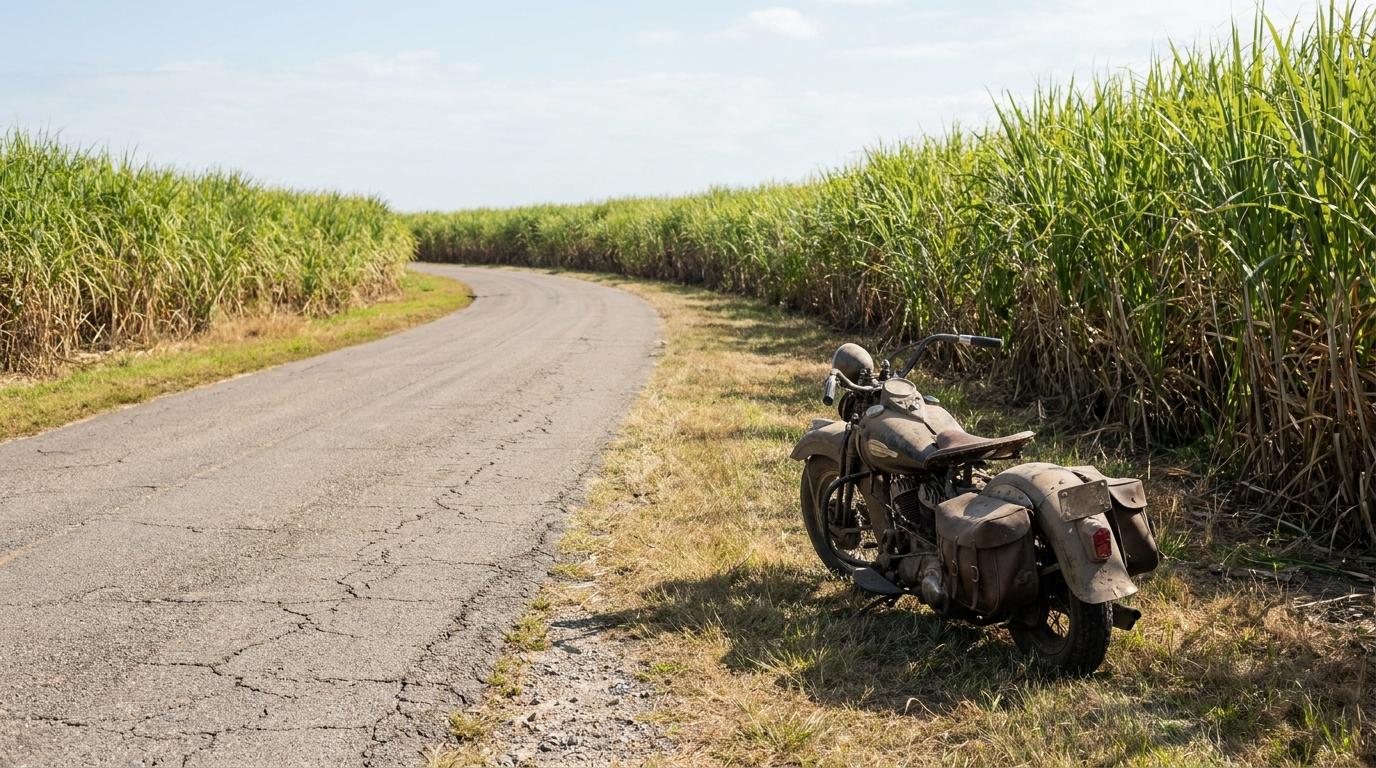
Generally, after a motorcycle accident on a rural road in Louisiana, you should get to safety, call 911, get medical care and document the scene yourself before anything changes. Back roads often have no cameras and no witnesses. That means your own photos and notes may become the main record of what happened.
Rural crashes can happen in broad daylight. Louisiana State Police recently looked into two separate deadly motorcycle crashes in the Houma and Thibodaux area, as WDSU reported. One happened at noon on Laurel Valley Road near Choctaw Road in Thibodaux, the kind of two-lane parish road this guide covers. Here is what to do before a ride and after a crash on a back road.
Why are rural Louisiana roads risky for motorcycle riders?
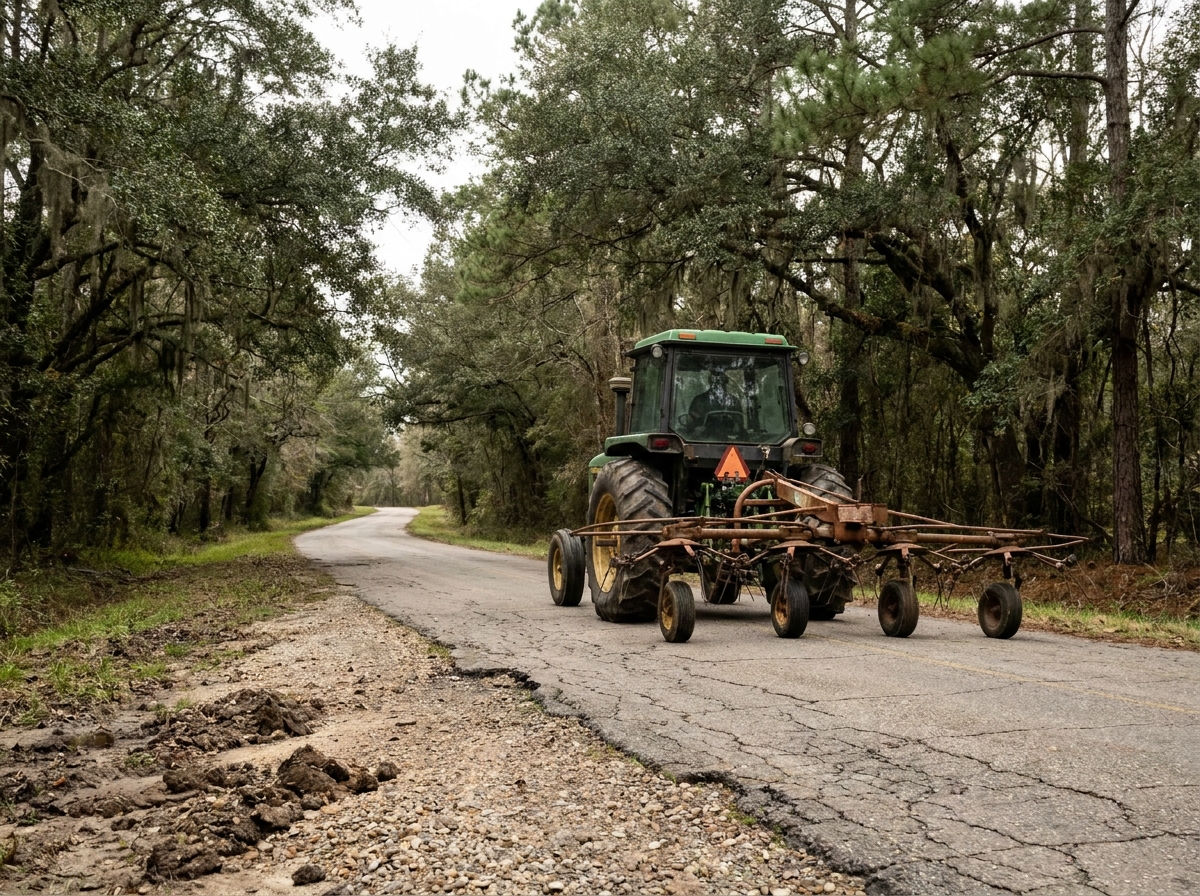
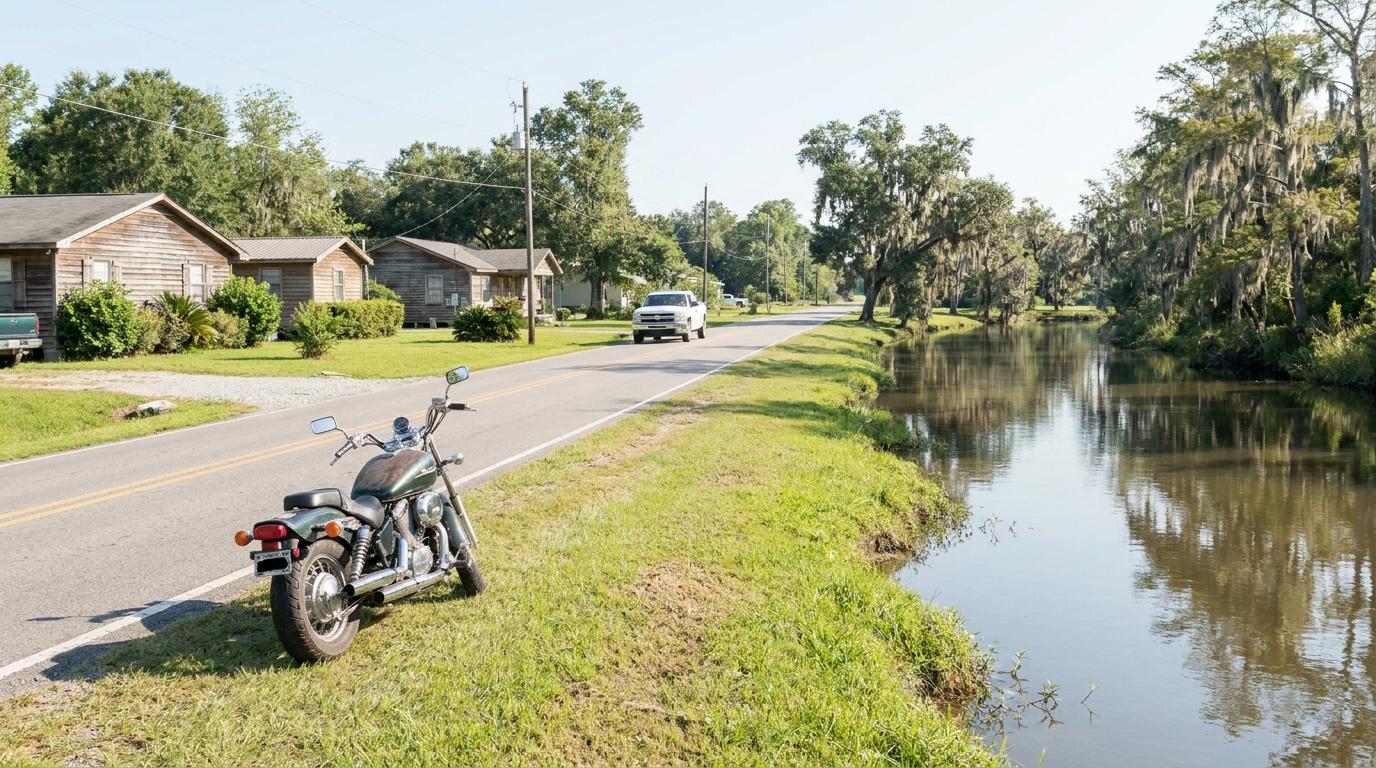
Rural Louisiana roads mix tight curves, narrow shoulders, loose gravel, slow farm traffic and drivers who turn without seeing you. A car can often shrug off these hazards. On two wheels, you have far less room for error, and help may be miles away.
Here are the hazards riders run into most on parish back roads:
- Sharp, unmarked curves. Many two-lane roads follow old property lines or bayous, so bends come up fast with few warning signs.
- Poor or missing shoulders. Some roads drop off into soft dirt, a ditch or water, with no paved edge to steer onto.
- Gravel and mud. Gravel from driveways and side roads spills onto the pavement, and mud from fields can make a curve slick.
- Farm equipment. During sugarcane harvest in south Louisiana, usually in the fall, tractors and cane trucks move slowly and swing wide.
- Left-turning drivers. A driver turning into a driveway or side road may misjudge your speed or never see you at all.
- Animals and low light under trees. Deer, dogs and loose livestock can cross, and shaded stretches hide road defects.
Some back-road crashes involve only one vehicle. A rider may go down on gravel or a broken edge, and no one else is there. That makes it harder later to show what really caused the crash.
What should you do before a back-road ride?
Before you ride, plan for the chance that you could be alone if something goes wrong. Charge your phone, carry your license and insurance card, wear full gear and tell someone your route. A few minutes of prep can make a bad day much easier to handle.
Louisiana law requires motorcycle riders to wear a helmet (La. R.S. 32:190). Beyond the law, a helmet, gloves, boots and a riding jacket protect you on rough pavement. The NHTSA motorcycle safety page has more tips on gear and being seen by drivers.
Use this short checklist before you head out:
- 01. Charge your phone and set up emergency contact and medical info on the lock screen.
- 02. Share your live location with a friend or family member.
- 03. Pack a small first-aid kit, water and a flashlight.
- 04. Keep your license, registration and insurance card on you.
- 05. Check your policy for uninsured motorist coverage (insurance that pays you when the at-fault driver has little or no insurance).
- 06. Consider a helmet or handlebar camera, which can record what happened.
What should you do after a motorcycle accident on a rural road?
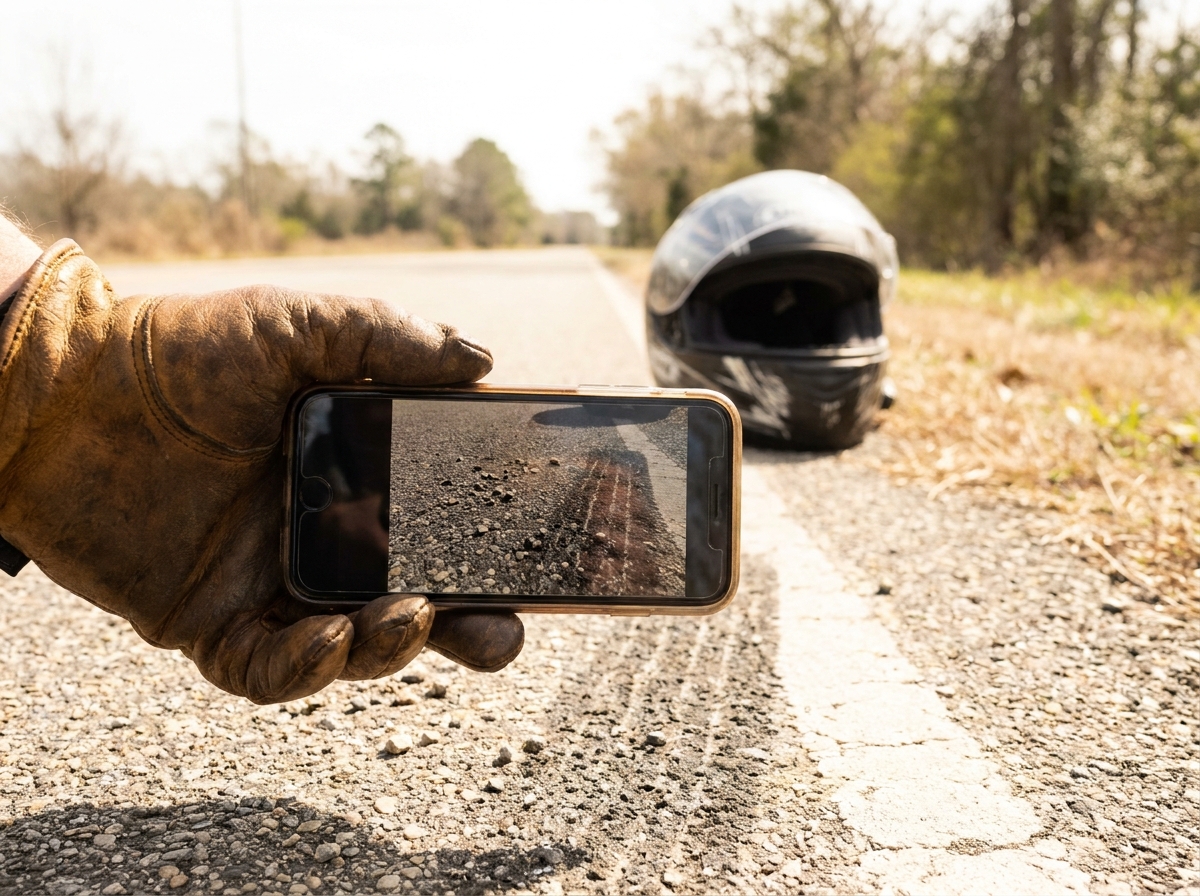
After a crash, focus on safety first, then on getting help and saving proof. Follow these steps in order as best you can. If you are badly hurt, let others handle them and just call for help.
- 01. Get out of traffic if it is safe to move. Step away from the lane, especially near a curve where drivers can't see you coming. If your neck or back hurts, stay still unless you are in danger.
- 02. Call 911. Tell the dispatcher your road name, the nearest crossroad or mile marker and any landmarks. A trooper or parish sheriff's deputy may respond, so ask for the report number.
- 03. Get medical care, even if you feel fine. Adrenaline can hide pain from a head, neck or back injury for hours. A same-day medical record also shows when your injuries started.
- 04. Take photos and video. Capture your bike, the other vehicle, the road surface, gravel, skid marks, signs and the view around the curve.
- 05. Swap information. Get the other driver's name, phone, license plate, insurance company and policy number.
- 06. Look for witnesses and cameras. Ask nearby homes, farms or stores if they saw anything or have a camera pointed at the road.
- 07. Leave your bike and gear as they are. Don't repair or toss your helmet, jacket or bike yet, because the damage itself can tell the story.
- 08. Write notes the same day. Record the time, weather, light and what each driver did.
How do you document a crash when no one saw it?
When no one saw the crash, you build the record from the scene itself. Photos, road marks, debris, video and your own early notes can all help show what happened. Act fast, because rain, traffic and road crews can erase that proof within days.
 Do I Have A Case?Answer a few quick questions about your accident.Check My Case
Start with the road. Photograph any gravel patch, pothole, broken edge, mud trail or missing sign from several angles. Put a common object, like a glove, next to a hole or edge to show its size.
Next, show the sight lines. Stand where the other driver was and take photos of what they could see. If sun glare or overgrown brush blocked the view, capture that too, ideally at the same time of day.
Then chase down video. Home and business camera footage may be recorded over quickly, so ask soon and politely. Ride-tracking apps and phone GPS data may also show your route and timing.
Finally, keep a simple file. Save the police report number, medical records, repair estimates, photos and every letter from an insurance company. If a road defect played a part, note it clearly, since claims involving public roads can follow special rules.
What should you avoid after a rural motorcycle crash?
The biggest mistakes are skipping medical care, saying too much to an insurance adjuster, posting online and waiting too long to act. Each one can make it harder to show what happened. Some can lower what an insurer is willing to pay.
Avoid these common missteps:
- Saying "I'm fine" or "it was my fault" at the scene. You may not know yet how hurt you are or what caused the crash.
- Giving a recorded statement right away. The other driver's insurer may ask for one, and you can generally wait until you understand your options.
- Posting photos or comments on social media. Insurers may look at your posts and read them out of context.
- Fixing or selling your motorcycle too soon. The bike and your gear can be key proof.
- Skipping follow-up care. Gaps in treatment can be used to argue your injuries weren't serious.
Under comparative fault (a rule that splits blame among the people involved), your recovery is generally reduced by your share of fault (Civil Code Article 2323). For crashes on or after January 1, 2026, Act 15 of 2025 changed this so that a person found 51% or more at fault recovers nothing. Earlier crashes generally follow the older rule. Insurers may argue that a rider was speeding or took a curve too fast, so careful records matter.
When should you get help after a crash on a back road?
Consider talking with a personal injury attorney if you were hurt, the other driver denies fault, a road defect may be involved or an insurer is pushing back. Deadlines also matter. Waiting too long can end your right to file a claim.
For injuries on or after July 1, 2024, you generally have two years to file a lawsuit (Civil Code Article 3493.1, added by Act 423 of 2024, on the Louisiana State Legislature website). For injuries before that date, the deadline is generally one year. Louisiana calls this deadline prescription. Certain claims, such as those against public bodies, can have extra steps, so check early.
Another change starts January 1, 2026. Under Act 466 of 2025, recovery of past medical expenses is generally limited to amounts actually paid rather than amounts billed, with details that depend on how the bills were paid. Like most tort reform changes, it generally applies going forward, so crashes before that date may follow the older rules. This article is general information, not legal advice, and how these rules apply depends on the facts of your crash.
If you or someone you love was hurt in a motorcycle wreck on a Louisiana back road, Chris Corzo Injury Attorneys can talk with you about the crash and your options.
To reach Chris Corzo Injury Attorneys, contact the firm through its website.
Frequently asked questions
Calling 911 is generally the right move after any crash with injuries or real damage. A trooper or parish deputy can create a report, which records the scene, the drivers and what each person said. On a back road with no witnesses, a police report may be one of the few official records of the crash, so ask for the report number.
Louisiana generally allows two years to file a lawsuit for injuries on or after July 1, 2024, under Civil Code Article 3493.1, added by Act 423 of 2024. For injuries before that date, the deadline is generally one year. Insurance claims can move on their own timeline, and some claims have extra steps, so checking early is wise.
A road hazard crash may still lead to a claim, depending on the facts. Whoever is responsible for the road, or for spilling gravel or mud on it, could play a part. Photograph the hazard right away from several angles, note its location, and keep your bike and gear as they are. Claims involving public roads can follow special rules and deadlines.
Partial fault generally reduces what you can recover under Louisiana's comparative fault rule in Civil Code Article 2323. For crashes on or after January 1, 2026, Act 15 of 2025 means a person found 51% or more at fault recovers nothing. For earlier crashes, recovery is generally reduced by your percentage of fault. The outcome depends on the facts.
Helmet use is required for motorcycle riders under La. R.S. 32:190. An insurer may argue that riding without a helmet made a head injury worse, which could affect a claim. How much it matters generally depends on the type of injury and the facts of the crash. Wearing a helmet on every ride is the safest choice for your health.
Sources