

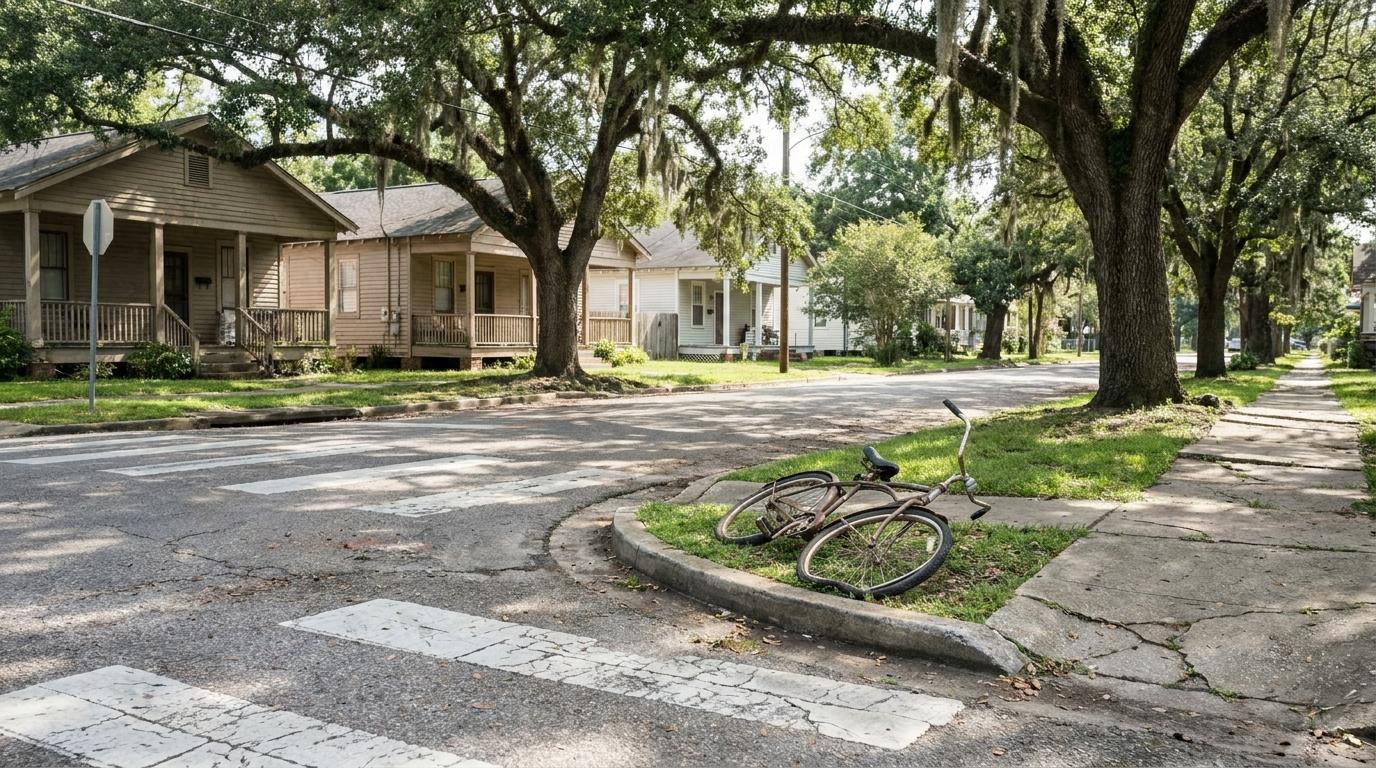
In many cases, if a hit-and-run driver is never found in Louisiana, you may still be able to recover money through your own uninsured motorist (UM) coverage. The criminal case and the insurance claim run on separate tracks. That means a family generally doesn't have to wait for an arrest, a bond hearing or a conviction to start a claim.
What's the short answer if a hit-and-run driver isn't found?
You can generally still make an insurance claim. Louisiana auto policies usually treat an unknown hit-and-run driver like an uninsured driver. So the uninsured motorist coverage on your own policy, or on a family member's policy, may pay for medical bills, lost wages and pain and suffering. In a death case, it may also cover the family's losses.
The police case may take months or years. It may never end in an arrest. Your claim doesn't have to sit on hold while that plays out.
That surprises a lot of people. In one fatal Baton Rouge hit-and-run, the victim's family started a petition calling for higher bond amounts in these cases, according to Louisiana First News coverage of the Baton Rouge bond petition. Questions like theirs are fair, and they show how easy it is to mix up two different systems.
One system is the criminal case, which is about punishment and public safety. The other is the civil and insurance side, which is about paying for the harm. This guide walks through both, in plain words.
What usually happens after a hit-and-run in Louisiana?
Usually, police investigate first, the injured person or family notifies insurers, and then the two tracks move at their own pace. The criminal side depends on whether investigators can identify the driver. The insurance side can start right away, whether or not the driver is found.
Here's a typical order of events, though no two cases go exactly the same way:
- Police respond, document the scene and write a crash report.
- Investigators look for the vehicle using broken parts, paint marks, nearby cameras and tips from witnesses.
- If they find a suspect, the district attorney decides what charges to bring.
- After an arrest, a judge sets bond.
- The case moves toward a plea deal or a trial, which can take a long time.
Meanwhile, life doesn't pause. Medical bills arrive, work is missed, and in a death case, the family faces funeral costs. That's why the insurance claim usually needs to begin long before the criminal case wraps up.
Hit-and-runs can happen anywhere, from I-10 and I-12 to neighborhood streets in any parish. Pedestrians and cyclists are often hurt the worst because nothing protects them. The NHTSA pedestrian safety page explains why people on foot face such serious risks on the road.
What does bond decide in a hit-and-run case, and what doesn't it?
Bond decides one thing: the conditions under which an arrested person can be released before trial. It's meant to make sure the person comes back to court and to help protect the public. It doesn't decide guilt, set a sentence or pay anything to the victim's family.
Under Louisiana's Code of Criminal Procedure, a judge weighs factors such as how serious the charge is, the person's past record and whether they're likely to flee. A judge may also add conditions, like no driving or regular check-ins. Bond is a promise to return to court, not a fine.
Families sometimes feel a low bond means the system isn't taking a death seriously. That feeling is understandable. But a bond amount is not a measure of the case or of the life that was lost.
The charge, the evidence and the outcome are decided later, at trial or through a plea. And bond money doesn't go to the family. Compensation for your losses comes from somewhere else, mostly insurance.
How does Louisiana law treat the criminal case and the insurance claim?
Louisiana treats them as two separate cases with different goals, different rules and different levels of proof. The criminal case asks whether the state can prove a crime. The civil and insurance side asks who should pay for the harm, and how much.
Hit-and-run itself is a crime under La. R.S. 14:100. You can look it up on the Louisiana Legislature's official law site. The law requires a driver involved in a crash to stop, give their identity and offer reasonable help to anyone hurt. Penalties are generally harsher when someone is killed or seriously injured.
Here's how the two sides compare:
| Criminal case | Insurance or civil claim | |
|---|---|---|
| Who brings it | The state, through the district attorney | The injured person or the family |
| Main goal | Punishment and public safety | Paying for medical bills, lost income and other losses |
| Proof needed | Beyond a reasonable doubt | More likely than not |
| Does the driver need to be found? | Yes | No, UM coverage may apply |
| Who controls it | The prosecutor | You, your insurer and, if needed, a civil court |
Because the proof standards differ, a claim may succeed even if no one is ever convicted. On the flip side, a conviction doesn't automatically put money in your hands. A judge may order restitution (money a convicted person must repay to the victim), but collecting it can be slow or uncertain.
What if a loved one died?
When a hit-and-run causes a death, Louisiana law allows certain family members to bring two kinds of claims. A survival action under Civil Code Article 2315.1 covers what the person went through before death. A wrongful death claim under Civil Code Article 2315.2 covers the family's own losses, such as lost support and companionship.
The law sets out which relatives can bring these claims, starting with a spouse and children. Who qualifies in your family depends on the facts.
Recent changes to Louisiana law
Three recent changes matter here, and each one depends on dates. First, prescription (Louisiana's word for a filing deadline) is generally 2 years for injuries on or after July 1, 2024, under Civil Code Article 3493.1, added by Act 423 of 2024. Injuries before that date generally keep the old 1-year deadline. You can read these laws on the Louisiana Legislature's law site.
Second, Act 15 of 2025 changed how shared fault works starting January 1, 2026. Under that change, a person found 51% or more at fault generally recovers nothing. Before it, a person's recovery was generally just reduced by their share of fault.
Third, Act 466 of 2025 limits past medical expenses to amounts actually paid, also starting January 1, 2026. These 2026 changes generally apply going forward, to crashes on or after that date. Which rules apply to your crash depends on the dates and facts.
How does uninsured motorist coverage work when the driver is unknown?
UM coverage steps in when the at-fault driver has no insurance, not enough insurance, or can't be identified. In Louisiana, this coverage is governed by La. R.S. 22:1295, found on the Louisiana Legislature's official law site. If a hit-and-run driver is never found, your UM coverage may pay the losses that driver's insurance would have paid.
 Do I Have A Case?Answer a few quick questions about your accident.Check My Case
A few points are worth knowing:
- UM is generally part of Louisiana auto policies unless someone rejected it in writing on an official form. Even if you think you don't have it, ask your insurer to check.
- UM often follows the person, not just the car. Depending on the policy wording, it may cover you as a pedestrian, a cyclist or a passenger, and it may extend to relatives who live in your household.
- Contact matters. If the fleeing vehicle actually hit you or your car, proof is usually simpler. If it ran you off the road without touching you, the law may require proof from an independent witness.
- Other coverage may help too, such as medical payments coverage (MedPay), health insurance and collision coverage for your car.
Keep in mind that in a UM claim, your own insurer is the one paying. The adjuster works for the insurance company, so it helps to understand your policy before you talk numbers. The Louisiana Department of Insurance has consumer help if you have questions about how your policy or insurer works.
What if police find the driver later? Their liability insurance, if they have any, may then become the main source of payment. Your UM coverage may still help with losses that go beyond their limits.
Louisiana also has a crime victims reparations program that may help with certain costs, like funeral expenses, in some cases. Eligibility rules apply. The victim assistance office at your local district attorney's office can tell you whether it fits your situation.
What should you do after a hit-and-run, step by step?
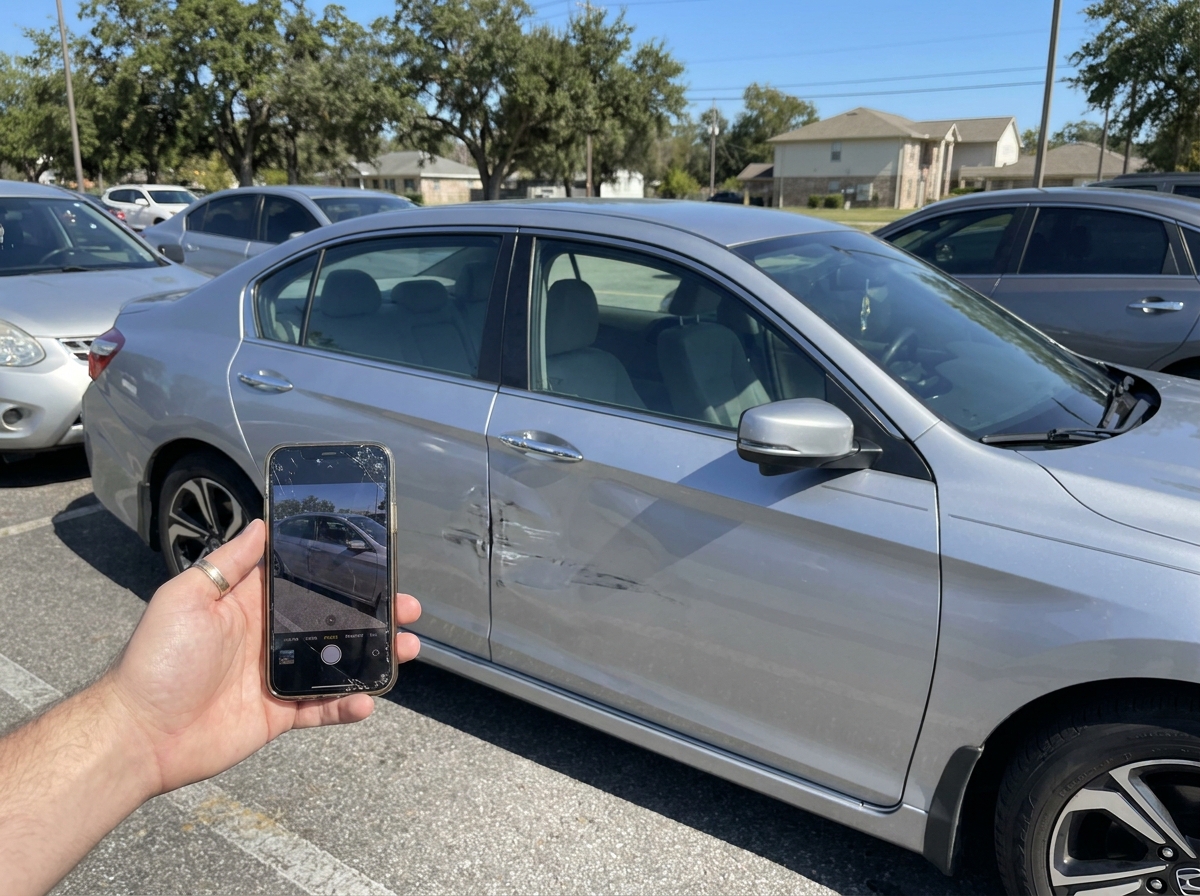
Get medical care, report the crash to police, preserve evidence and notify your insurer as soon as you can. These steps protect your health first and your claim second. You can take most of them without knowing who the driver was.
- 01. Get medical care. Call 911 at the scene if you can. See a doctor even if you feel okay, since some injuries show up later.
- 02. Report it to police. Get the report or item number. Many UM policies expect a prompt police report in a hit-and-run.
- 03. Write down what you remember. Note the color, make, partial plate, damage and which way the vehicle went.
- 04. Take photos. Capture the scene, your injuries and any vehicle damage, including paint marks or broken parts.
- 05. Look for cameras fast. Businesses, doorbell cameras and traffic cameras may have footage, and it can be erased within days.
- 06. Find witnesses. Get names and phone numbers. This is especially important if the other vehicle never touched you.
- 07. Notify your insurer. Tell your own insurer as soon as you can, and ask about UM and MedPay on every policy in your household.
- 08. Keep records. Save medical bills, pay stubs, receipts and a simple journal of pain and missed activities.
- 09. Stay in touch with investigators. Ask the detective and the victim assistance office how you'll get updates.
- 10. Get advice before signing anything. Don't sign releases or give recorded statements until you understand your coverage.
What mistakes can hurt a hit-and-run claim?
The biggest mistake is waiting for police to find the driver before doing anything about insurance. Delays can mean lost evidence, missed notice rules and a deadline that slips by. Other mistakes are smaller, but they add up.
Common ones include:
- Waiting on the criminal case. The arrest, bond hearing and trial run on their own schedule. Your claim generally doesn't need to wait for any of them.
- Assuming you have no coverage. Many people don't know UM is on their policy, or that a relative's policy may apply.
- Giving a recorded statement too early. Guesses about speed, distance or your own actions can be used later to argue you were partly at fault.
- Gaps in medical care. Skipping appointments can make it look like your injuries weren't serious.
- Posting online. Photos and comments on social media can be taken out of context.
- Fixing the car first. Repairs before photos can erase paint marks and damage patterns that help prove what happened.
- Missing the deadline. Louisiana's prescription period applies even while the police case is open.
Shared fault is worth a special mention. Insurers sometimes argue that a pedestrian or cyclist was partly to blame. For crashes on or after January 1, 2026, the new fault rule means how much fault gets assigned can matter a great deal, so careful words and good evidence help.
What are the next steps for your family?
Start the insurance side now, keep supporting the criminal case, and get clear answers about your coverage and deadlines. You can push for justice and protect your family's finances at the same time. One doesn't have to wait for the other.
If you're grieving or recovering, all of this can feel like too much. Break it into small pieces: one call to police, one call to your insurer, one folder for paperwork. Ask a trusted friend or relative to help track dates and documents.
It can also help to talk with a personal injury firm about how UM coverage, wrongful death claims and Louisiana's recent law changes apply to your situation. Chris Corzo Injury Attorneys handles car wreck and auto accident claims across Louisiana, including hit-and-runs where the driver is never found.
If you'd like to talk through your situation, you can contact Chris Corzo Injury Attorneys.
Frequently asked questions
Uninsured motorist coverage is generally designed for this exact situation. In Louisiana, an unknown hit-and-run driver is usually treated like an uninsured driver under your policy. You'll typically need to report the crash to police and to your insurer quickly. If the other vehicle never touched you or your car, your policy and Louisiana law may require proof from an independent witness.
A bond amount is not a verdict on the case. Bond sets the conditions for a person's release before trial, mainly to make sure they return to court and to protect the public. A judge looks at factors like the charge, the person's record and the risk of flight. Guilt and punishment are decided later, through a trial or a plea.
The filing deadline in Louisiana, called prescription, is generally 2 years for injuries on or after July 1, 2024, under Civil Code Article 3493.1. Crashes before that date generally keep the old 1-year deadline. In a death case, the clock for a wrongful death claim generally runs from the date of death. Insurance policies may also have their own prompt-notice rules, so acting early matters.
A criminal case is mainly about punishment, not paying for your losses. A judge may order restitution if the driver is convicted, but collecting it can be slow or uncertain. Most families rely on insurance instead, such as their own UM coverage, MedPay, health insurance, or the driver's liability policy if the driver is found and insured. These claims can move forward while the criminal case is pending.
Sources