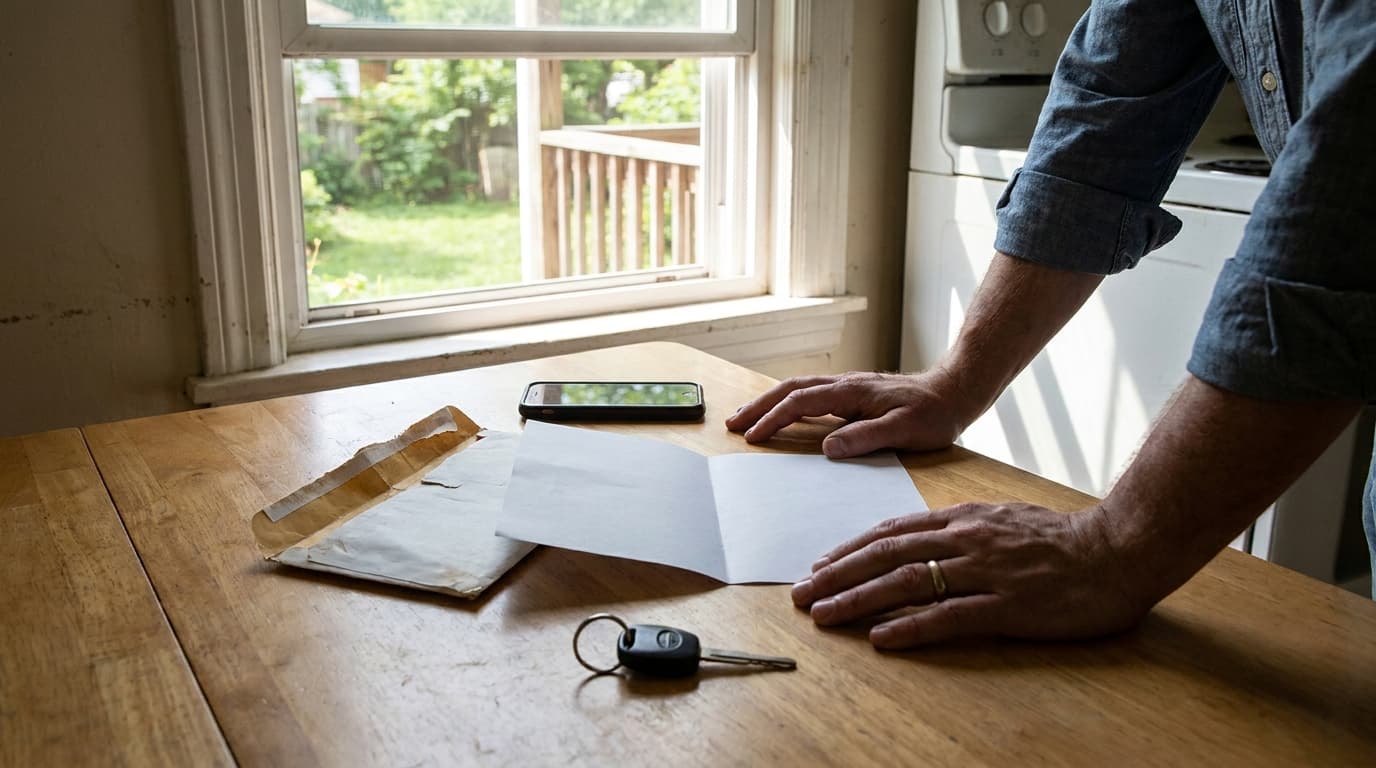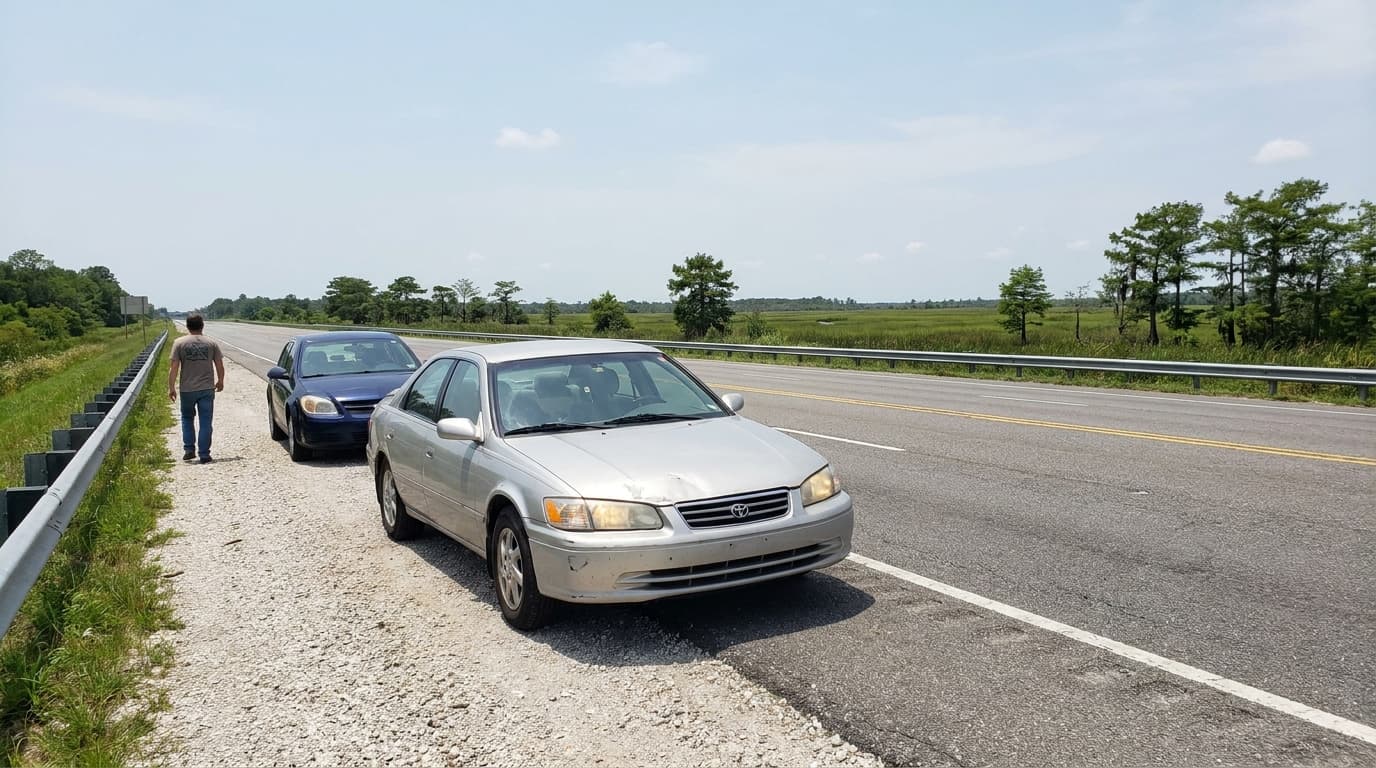


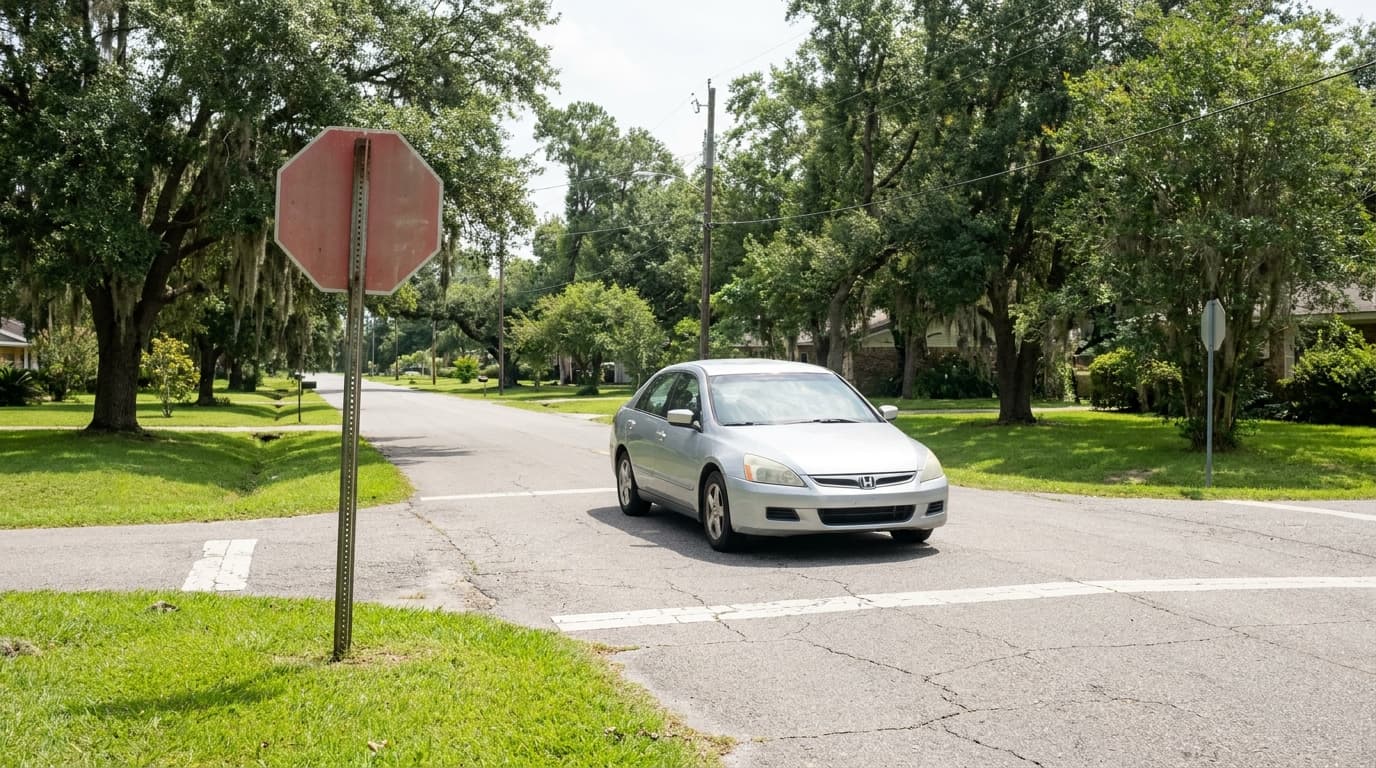
Generally, yes: a stop-sign crash can cause a brain injury even when the car damage looks minor, and in Louisiana you may be able to make a claim against the at-fault driver. Headaches, fogginess or mood changes can show up days later. Early medical records often shape how an insurer treats the accident claim.
What is the short answer on brain injuries from stop-sign crashes?
A driver who runs a stop sign often hits another car in the side, and that kind of crash can hurt the brain. You may have a claim if the other driver caused the wreck. The strength of that claim usually depends on your medical records, how soon you got care, and whether you can show how your daily life changed.
This article walks through why these crashes are so hard on the head, which symptoms to watch, and how Louisiana law and insurers handle these claims. It is general information, not legal advice. Every case depends on its own facts.
Local news from Central, near Baton Rouge, recently reported a crash like this, where a man was left recovering from a brain injury after another vehicle hit him at a stop sign. Intersections where neighborhood traffic meets faster through traffic can be risky. If you were hurt in a crash like this, the steps below can help you protect both your health and your claim.
What usually happens to your brain in a side-impact crash?
Side-impact crashes, often called T-bone crashes, leave very little metal between you and the other car. The door and side window are much closer to your head than the front of the car is. When a car runs a stop sign and hits your door, your head can strike the window or door frame, or snap sideways.
A traumatic brain injury (TBI) means damage to the brain from a hit, jolt or sudden movement of the head. You do not need to hit your head to get one. When your body stops or turns suddenly, your brain can move inside the skull and bump against it.
That sideways, twisting motion is one reason these crashes can be so harmful. A front or rear crash pushes you forward or back, and seat belts and front airbags are designed for that. A side hit can whip your head in a direction your body is less ready for, even if side airbags open.
Speed matters too. Some intersection crashes happen when one driver rolls through the sign or pulls out into a road where traffic is moving at 40 or 50 miles per hour. The car that was hit may look only dented, but the force on the person inside can still be serious.
The National Highway Traffic Safety Administration (NHTSA) tracks crash types and safety ratings, including side-impact testing. Its crash-test ratings can help you see how well a vehicle protects people in side crashes.
Which delayed brain injury symptoms should you watch for?
Watch for headaches, dizziness, confusion, memory trouble, sleep changes and mood changes in the days and weeks after a crash. Many of these symptoms do not show up right away. Adrenaline and shock can hide them at the scene, and you may feel "fine" until you try to work, read or drive.
Here are common signs to keep an eye on:
- Headaches that linger or get worse
- Dizziness, balance problems or blurry vision
- Trouble focusing, remembering things or finding words
- Feeling slow, foggy or tired all the time
- Sensitivity to light or noise
- Sleeping much more or much less than usual
- Irritability, anxiety, sadness or quick mood swings
- Ringing in the ears
Some signs mean you should get emergency care right away. These include a headache that keeps getting worse, repeated vomiting, seizures, slurred speech, weakness or numbness, one pupil larger than the other, or growing confusion. Do not wait to see if these pass.
Family members often notice changes before you do. A spouse may see that you forget conversations, or a coworker may notice you struggle with tasks that used to be easy. These outside observations can matter later, both for your doctor and for your claim.
It also helps to know that a concussion is a type of mild traumatic brain injury. "Mild" describes how the injury looked at first, not how it may affect your life. Some people recover in a few weeks, while others deal with symptoms for months.
How does Louisiana law look at a brain injury from a stop-sign accident?
Louisiana law requires drivers to stop at stop signs and yield to traffic that has the right of way, under La. R.S. 32:123. A driver who breaks that rule and causes a crash may be found at fault. Fault, the filing deadline and recent tort reform changes all affect an injury claim.
This section is general information, not legal advice. Laws change, and how they apply depends on the facts and the date of your crash. You can read La. R.S. 32:123 and the Civil Code articles below on the Louisiana State Legislature's website.
The filing deadline
Louisiana calls its filing deadline prescription, which means the time limit to file a lawsuit. Under Civil Code Article 3493.1, added by Act 423 of 2024, you generally have two years to file for injuries that happened on or after July 1, 2024, and only one year for injuries before that date. Missing the deadline can end your right to recover, no matter how serious the injury.
These claims can take time to understand, because symptoms change and doctors may need months to judge your recovery. That makes it easy to lose track of the calendar. Write down your crash date and the deadline that applies.
Shared fault
Louisiana uses comparative fault, which means your recovery can be reduced by your share of the blame, under Civil Code Article 2323. For example, an insurer may argue you were speeding through the intersection when the other driver ran the stop sign. If you were found partly at fault, your recovery may be lowered by that share.
A major change generally applies to crashes on or after January 1, 2026. Under Act 15 of 2025, a person found 51% or more at fault recovers nothing. For crashes before that date, the older rule generally applies, so a person who was partly at fault may still recover a reduced amount.
Medical expenses
Act 466 of 2025 changes how past medical bills are counted, generally for crashes on or after January 1, 2026. Past medical expenses are limited to amounts actually paid, rather than the full billed amount. The date of the crash and the details of your case can affect how this applies.
What should you do after a stop-sign crash, step by step?
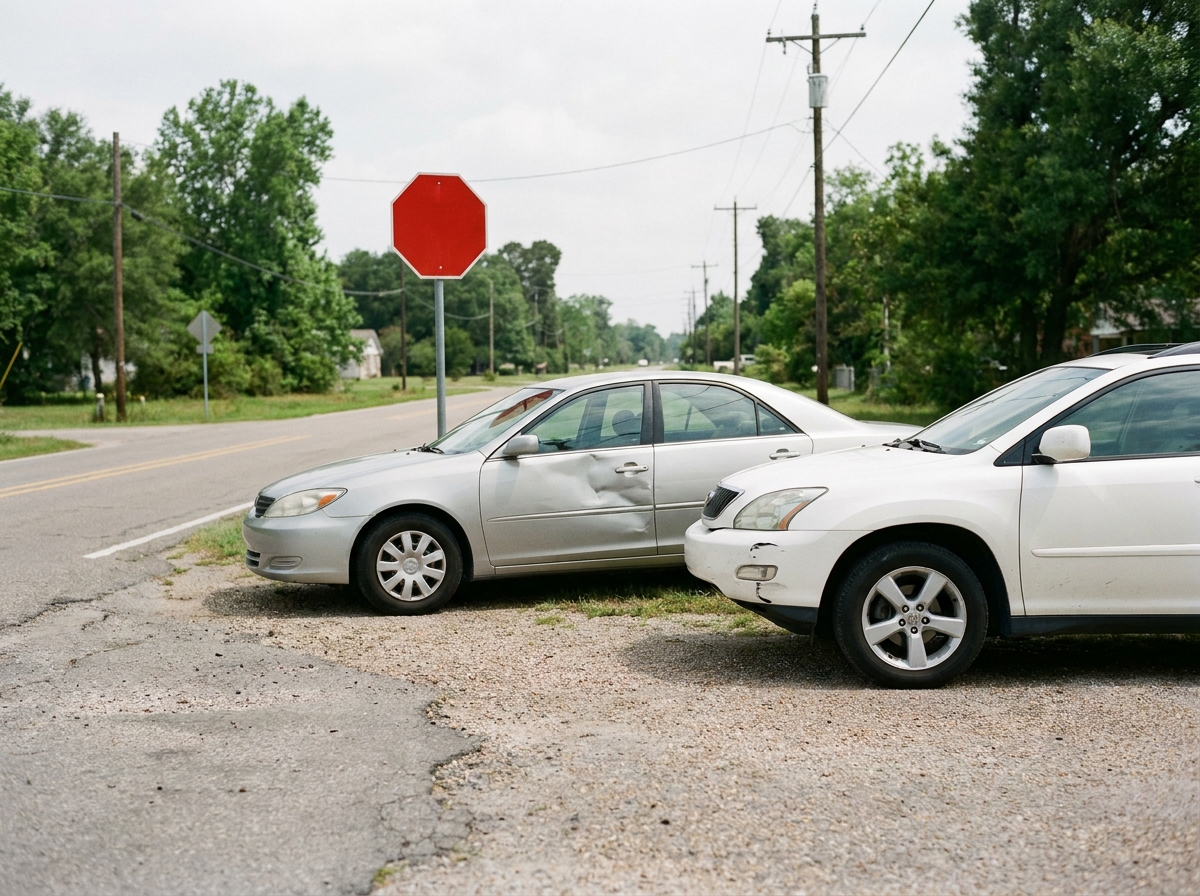
Get medical care first, then document everything: the crash, your symptoms and how your life has changed. These steps protect your health and create the records an insurer will look at. You do not need to do them perfectly, but the earlier you start, the better.
- 01. Call 911 and get checked. Let police make a report and let paramedics look at you, even if you feel okay.
- 02. See a doctor within a day or two. Tell them you were in a side-impact crash and describe any head movement, even if you did not hit your head.
- 03. Report every symptom. Mention headaches, fog, sleep problems and mood changes, not just pain. If it is not in your chart, it may be hard to prove later.
- 04. Follow the treatment plan. Go to follow-up visits, therapy and specialist appointments. Ask about a referral to a neurologist if symptoms last.
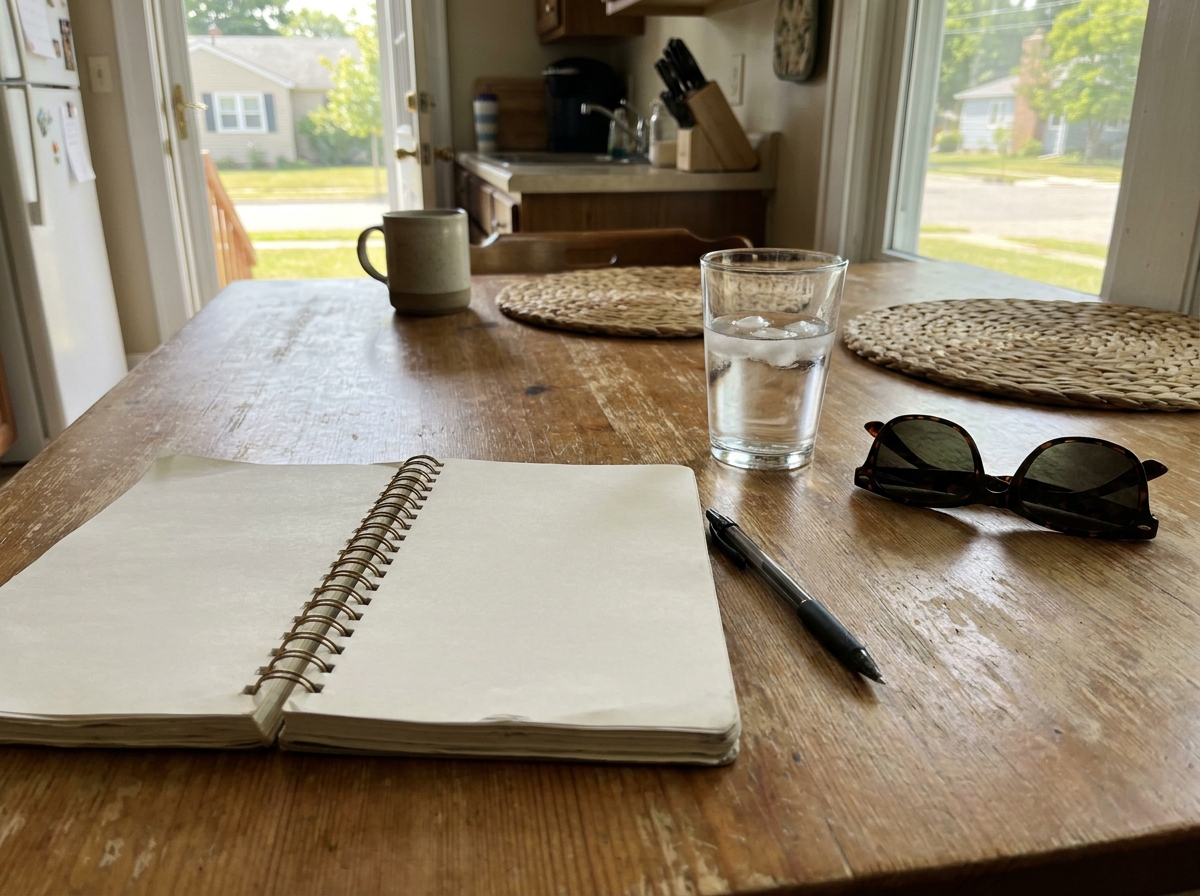
- 05. Keep a symptom journal. Write down each day how you feel, what you could not do, and what you forgot. Short notes are fine.
- 06. Ask people to notice changes. Family, friends and coworkers can describe how you were before and after the crash.
- 07. Save crash evidence. Keep photos of the cars, the intersection, the sign and any skid marks. Get the police report number and names of witnesses.
- 08. Keep work and school records. Missed days, lower performance or changed duties can show how the injury affects you.
- 09. Be careful with insurance calls. You can generally report the crash without giving a recorded statement to the other driver's insurer right away.
If you feel an insurer is treating you unfairly, the Louisiana Department of Insurance has information about filing a complaint. It also explains consumer rights for auto insurance in Louisiana.
How do insurers evaluate a traumatic brain injury claim?
Insurers usually look at your medical records, test results, treatment timeline and proof of how the injury changed your daily life. Early, consistent medical records carry a lot of weight. Because head injuries are often invisible, insurers may question them more than a broken bone.
A common problem is that scans often look normal after a concussion. A CT scan is good at finding bleeding or fractures, but it may not show the kind of injury that causes fog and memory trouble. An insurer may point to a normal scan and say you are fine.
That is why other evidence matters. Doctors may use symptom checklists, memory and thinking tests, or neuropsychological testing, which is a detailed set of tests that measure memory, focus and problem-solving. Statements from people who know you can also help show the before-and-after picture.
In claims like these, a few patterns come up again and again. An insurer may argue the crash was "low speed" because the car damage was small. It may point to gaps between doctor visits, or suggest your symptoms came from stress, age or an old injury.
An insurer may also make an early offer before you know how serious your injury is. These injuries can take months to settle into a clear picture. Accepting a quick offer usually means giving up any future claim for that crash.
Which mistakes hurt a brain injury claim?
The biggest mistakes are waiting to see a doctor, skipping follow-up care and downplaying your symptoms. Each of these can give an insurer a reason to doubt your injury. Most of them are easy to avoid once you know about them.
- Skipping the doctor because you feel okay. A delay can let an insurer argue something else caused your symptoms.
- Saying "I'm fine" at the scene or on the phone. People say it out of habit, but it can be quoted back later.
- Leaving gaps in treatment. Missed appointments can look like you got better, even if you did not.
- Only mentioning pain. Doctors need to hear about memory, focus, sleep and mood problems too.
- Posting on social media. A photo of you smiling at a family event can be used to suggest you are not hurt.
- Giving a recorded statement too soon. You may not yet know the full extent of your injury, and early statements can be used against you.
- Signing a release early. A release usually ends your claim for good.
- Losing track of the deadline. Prescription can run out while you are still in treatment.
Another quiet mistake is going back to full activity too fast. Doctors often advise rest and a slow return to work, screens and driving. Pushing through can slow recovery, and it can also leave a record that does not match your symptoms.
What are your next steps?
Focus on your health first, keep your records organized, and get advice on your claim before the filing deadline gets close. A brain injury from a stop-sign accident can affect your work, your family and your finances. Knowing your options early may help you make better choices.
Start by pulling together what you already have. That includes the police report number, photos, medical visit summaries, your symptom journal and contact details for witnesses. Keep everything in one folder, paper or digital.
Next, look at the calendar. Find your crash date, figure out whether it was before or after July 1, 2024, and note your filing deadline. If your crash happened on or after January 1, 2026, the new fault and medical-bill rules may also apply.
Chris Corzo Injury Attorneys works with people across Louisiana who were hurt in car wrecks and auto accidents, including crashes at intersections and stop signs. Talking with someone about your situation can help you understand how these rules may apply to you.
To talk through your situation, contact Chris Corzo Injury Attorneys.
Frequently asked questions
A concussion is a type of mild traumatic brain injury. The word "mild" describes how the injury looked at first, not how much it affects you. Some people recover in weeks, while others have headaches, memory trouble or mood changes for months. A concussion from a stop-sign crash may be part of an injury claim if another driver caused the wreck and your medical records document the symptoms.
The filing deadline in Louisiana is called prescription. Under Civil Code Article 3493.1, added by Act 423 of 2024, you generally have two years to file for injuries that happened on or after July 1, 2024. For injuries before that date, the deadline is generally one year. Missing the deadline can end your right to recover, so write down your crash date early.
A normal CT scan does not always mean there is no brain injury. CT scans are good at finding bleeding and fractures, but they often miss the kind of injury behind fog, memory trouble and headaches. Doctors may use symptom checklists, thinking tests or neuropsychological testing instead. Reporting every symptom and keeping up with follow-up care helps build a clear medical record.
Shared fault in Louisiana is handled under comparative fault, Civil Code Article 2323, which can reduce your recovery by your share of the blame. For crashes on or after January 1, 2026, Act 15 of 2025 generally means a person found 51% or more at fault recovers nothing. The date of your crash and the specific facts matter, so the outcome depends on your situation.
Sources