

Yes, in many cases you can. If you got hit while helping someone on the interstate in Louisiana, you may be able to file a claim against the driver who struck you, and your own auto insurance may help too. How strong that claim is depends on the facts, including where you stood and what each driver did.
Stopping for a stranded driver is one of the kindest things you can do on the road. It is also one of the most dangerous. This guide explains what usually goes wrong, how Louisiana law generally treats people hurt while helping, which insurance policies may apply, and how to help more safely next time. It is general information, not legal advice.
Can you file a claim if you got hit while helping someone on the interstate in Louisiana?
The short answer is that stopping to help generally does not take away your right to seek payment for your injuries. Louisiana is a fault-based state. That means the person whose careless driving caused a crash, and their insurance company, are generally responsible for the harm. How fault is shared between everyone involved, including you, depends on the facts.
If a driver was speeding, distracted, drunk or not paying attention and struck you on the shoulder, that driver may be at fault. The fact that you chose to stop does not usually excuse someone else for hitting you.
That said, an insurance company may argue that you share some of the blame. They might say you stood in a travel lane or parked in an unsafe spot. Louisiana uses a comparative fault system, which means your own share of fault can affect a claim. The details matter, which is why every case looks a little different.
What usually happens when someone stops to help on the interstate?
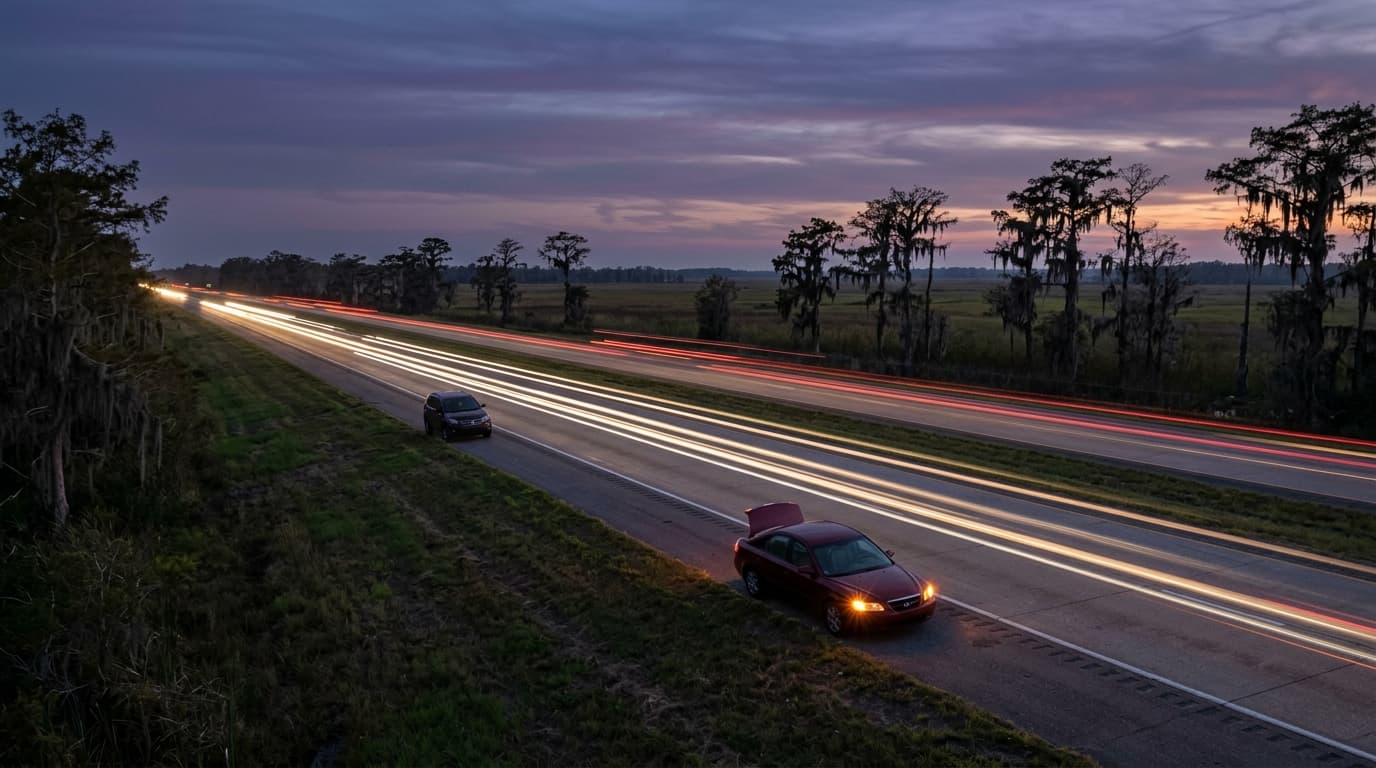
Most helper injuries follow a familiar pattern. A car breaks down, spins out or crashes. Another driver pulls over to check on the people inside, offer a phone or push the car out of the way. Then a third vehicle comes through and hits someone.
A crash on I-10 shows how quickly helping can turn deadly. According to KPEL's report on the I-10 crash, a Louisiana woman died after stopping to help a driver. What began as an effort to help someone in trouble turned into a deadly crash involving multiple vehicles. It is a painful reminder of how fast things can go wrong.
Why interstates are so risky for people on foot
Interstates are built for high-speed traffic, not for people walking. A few things make them especially dangerous:
- Speed. Drivers moving at highway speeds have very little time to react to someone standing near a lane.
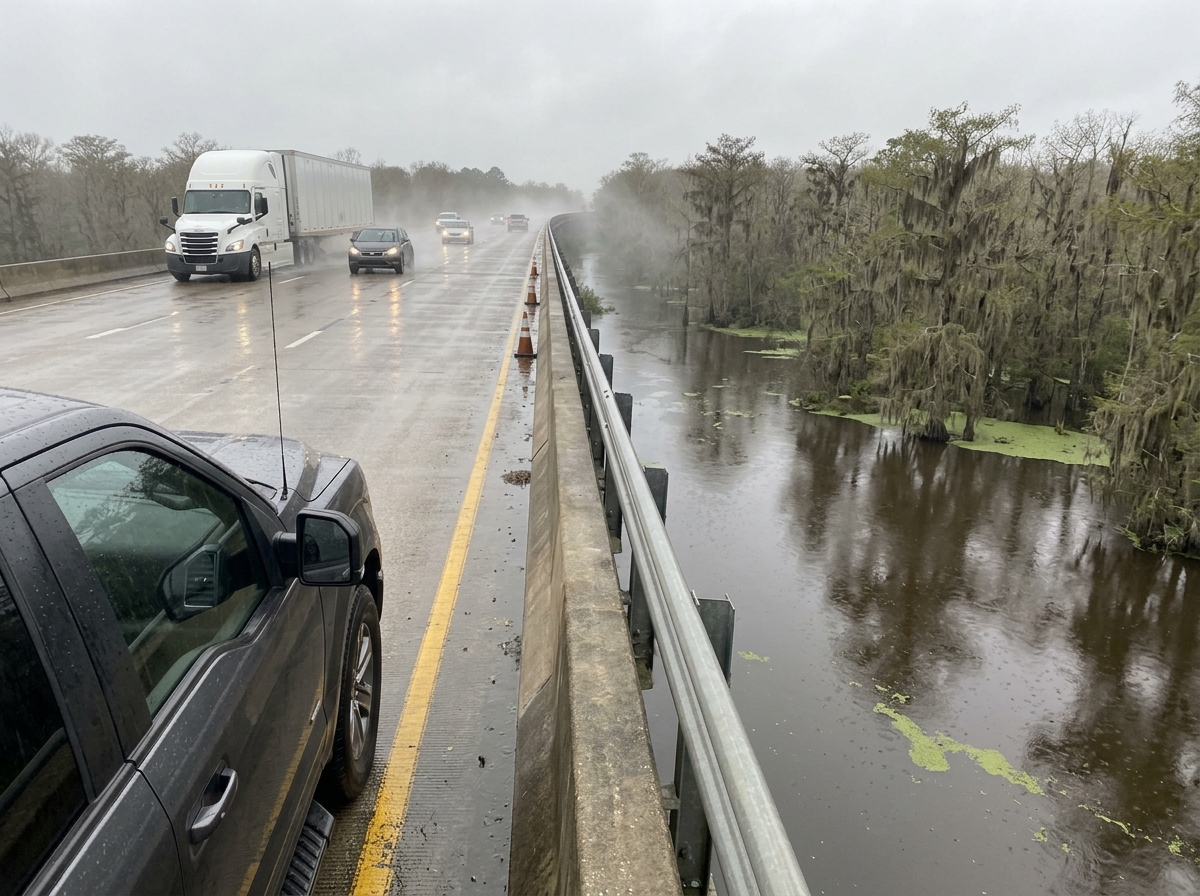
- Narrow shoulders. Some stretches of I-10, I-12, I-20 and I-49 leave little room between a parked car and passing traffic. Long bridges and elevated sections, like those over the Atchafalaya Basin or through Baton Rouge and New Orleans, may have little or no room to stand.
- Darkness and weather. Night, rain and fog make a person on foot very hard to see.
- Secondary crashes. When one crash happens, drivers behind it often slow suddenly or swerve. That can set off a second crash that catches people who stopped to help.
- Distraction and rubbernecking. Drivers looking at a wreck instead of the road may drift toward the shoulder.
Common injuries helpers suffer
When a car hits a person on foot, the injuries are often severe. Broken legs and hips, head injuries, spinal injuries and internal injuries are common. Even a helper who stays in their own car can be hurt if another vehicle rear-ends them on the shoulder.
How does Louisiana law look at people hurt while helping?
There is no single rule that decides every helper's case. But a few general ideas tend to come up.
The driver who hit you may be responsible
Drivers have a duty to pay attention, keep a safe speed for conditions and avoid hitting people and vehicles on the shoulder. If the driver who struck you broke that duty, they may be liable for your injuries. Police reports, witness statements and video can help show what happened.
The person who caused the first crash may share responsibility
Sometimes the driver who created the emergency in the first place was careless. Maybe they caused the original wreck by speeding or driving impaired. Injury law has a long-standing idea, often called the rescue doctrine, that recognizes it is foreseeable people will stop to help after someone creates a dangerous situation. Depending on the facts, that original driver may share responsibility for what happened to a rescuer.
How this applies in a specific Louisiana case depends on the facts, so it is worth talking it through with a lawyer.
Your own actions can be weighed too
Because Louisiana uses comparative fault, an insurer or court may look at what you did. Did you stand in a live lane? Did you leave your car partly in traffic? Did you turn on your hazard lights? Louisiana's comparative fault rules may also have changed in recent years, so how your share of fault affects a claim can depend on when the crash happened. This is one reason not to guess about your case on your own.
It also helps to know that stopping to help generally isn't treated as careless by itself. The bigger question is usually how the crash happened, not why you were there. Still, how your actions are viewed depends on the facts.
What about Louisiana's Good Samaritan law?
People often ask about Good Samaritan laws. Louisiana generally offers some legal protection to people who stop and give emergency help in good faith, though the details and limits depend on the facts. These laws are generally about claims against a helper over the help they gave, not about whether a helper who gets hurt can file a claim.
It is not designed to take away a helper's own right to make a claim against a driver who hit them. How it applies in any situation depends on the facts.
Deadlines matter
Louisiana has strict deadlines for filing injury claims, and the time limit that applies to you may depend on when you were hurt. If you miss the deadline, you can lose the right to make a claim at all. Because the exact time limit depends on when and how you were hurt, check with a lawyer early rather than assuming you have plenty of time.
Which insurance policies might pay for your injuries?
This is where many helpers are surprised. More than one policy may come into play.
- The at-fault driver's liability insurance. This is usually the first place to look. Drivers in Louisiana are generally required to carry liability coverage, which pays for injuries they cause to others.
- The first driver's insurance. If the person who caused the original crash was at fault, their liability coverage may also be involved.
- Your own uninsured/underinsured motorist (UM) coverage. If the driver who hit you had no insurance, too little insurance, or drove away, your own UM coverage may help. Depending on your policy's wording, UM coverage may sometimes apply even when you were on foot rather than in your car. Read your policy or ask your agent.
- Your own medical payments coverage. Some auto policies include "med pay," which can help with medical bills no matter who was at fault.
- Health insurance. Your health plan may cover treatment, though it may later seek to be paid back from any injury claim.
- Workers' compensation. If you were on the job when you stopped, such as a delivery driver or tow operator, workers' comp may apply. That depends on your work and the situation.
Every policy is different. Coverage limits, exclusions and who counts as an "insured" vary. Do not assume you have no coverage just because you were not driving when you were hurt.
How can you help a stranded driver more safely?
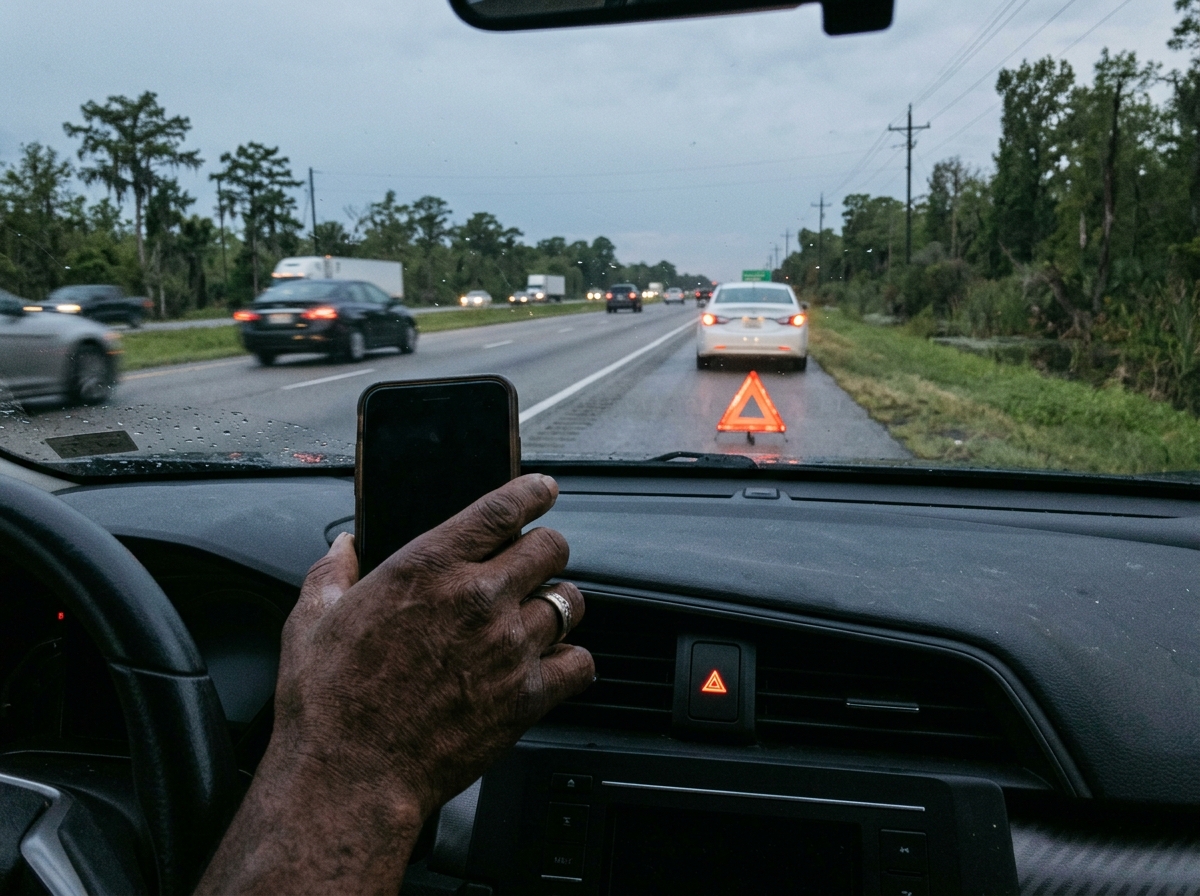
The safest help often comes from inside your own car. Here are practical ways to do good without stepping into traffic.
- 01. Call for help first. Dial 911 if anyone is hurt or a vehicle is blocking traffic. In Louisiana, you can also reach State Police by dialing *LSP (*577) from a cell phone. Give the interstate, direction of travel and nearest exit or mile marker.
- 02. Think twice before stopping. If trained responders are on the way and no one is in immediate danger, calling may be the best help you can give.
- 03. If you stop, pull well off the road. Choose a spot with as much shoulder as possible, ideally past the disabled car, not right behind it in the line of traffic.
- 04. Turn on your hazard lights. Use flares or reflective triangles if you have them and it is safe to place them.
- 05. Stay out of travel lanes. Never stand between vehicles or in a lane to direct traffic.
- 06. Get behind a barrier if you can. If there is a guardrail, people may be safer standing behind it, away from traffic.
- 07. Be seen. At night, a flashlight or bright clothing can help drivers see you.
- 08. Don't try to move a wreck yourself. Pushing cars on an interstate puts you right in harm's way. Let responders and tow trucks handle it.
- 09. Know when to leave. Once help arrives, it is usually safest to move on.
Calling for professional help is often the kindest and safest choice. Depending on where you are, state or local agencies may be able to send someone trained to handle a stranded vehicle safely, so it's worth calling for help before you step into traffic yourself.
What should you do if you're hit while helping? Step by step
If the worst happens, these steps can protect your health and your options.
- 01. Get medical care right away. Accept help at the scene and go to the hospital. Some serious injuries, like internal bleeding or head injuries, may not show up at first.
- 02. Make sure a police report is made. Louisiana State Police or local officers usually respond to interstate crashes. Ask how to get a copy of the report later.
- 03. Gather information if you can. Get names, phone numbers and insurance details of the drivers involved, plus contact info for witnesses. If you are too hurt, ask a family member or friend to help.
- 04. Take photos or ask someone to. Pictures of the scene, the vehicles, skid marks, the shoulder width, lighting and your injuries can matter later.
- 05. Note what you remember. Write down where you were standing, what you saw and what you heard as soon as you are able. Memories fade fast.
- 06. Report the crash to your own insurer. Your policy likely requires prompt notice, especially if you may need UM or med pay coverage.
- 07. Keep every record. Hospital bills, prescriptions, missed work and receipts for travel to appointments all help show your losses.
- 08. Follow your doctor's plan. Go to follow-up visits and therapy. Gaps in treatment can be used against a claim.
- 09. Talk to a lawyer before giving recorded statements. An injury lawyer can explain your rights and help you deal with insurers.
What mistakes can hurt a helper's claim?
Good people make honest mistakes after a crash. These are some of the most common ones to avoid.
- Skipping the doctor. Waiting to get checked out can hurt your health and give insurers a reason to say your injuries are not from the crash.
- Downplaying your injuries. Saying "I'm fine" at the scene or to an adjuster can come back later.
- Giving a recorded statement too soon. The other driver's insurer may ask for one quickly. You are generally not required to give it, and your words can be taken out of context.
- Guessing about fault. Don't apologize or say the crash was your fault before all the facts are known.
- Posting on social media. Photos or comments about the crash or your activities can be used to challenge your claim.
- Assuming you have no coverage. Many helpers never check their own UM or med pay coverage.
- Signing papers or accepting a quick offer. Early offers may not reflect the full cost of your injuries, especially if you will need future care.
- Waiting too long. Evidence like traffic camera footage can disappear, and Louisiana's filing deadlines are strict.
What are your next steps?
If you or someone you love was hurt while stopping to help on a Louisiana interstate, focus on healing first. Then gather your records, report the crash to your insurer and find out what coverage you may have.
Every situation is different. Who is responsible, which policies apply and how your own actions are viewed all depend on the facts. A conversation with an injury lawyer can help you understand where you stand. Chris Corzo Injury Attorneys talks with people across Louisiana about these kinds of crashes, and you are welcome to reach out with questions.
And if you see someone stranded on the interstate tomorrow, remember: a quick call for help, made from a safe spot, can be the most powerful kindness of all.
Frequently asked questions
Generally, no. Louisiana's Good Samaritan law is aimed at limiting when people who give emergency care in good faith can be held liable for that care, and it has exceptions. It is not designed to take away a helper's own right to make a claim against a careless driver who struck them. Whether you have a claim, and how strong it is, depends on the facts of your crash.
Your own auto insurance may help. Many Louisiana auto policies include uninsured/underinsured motorist coverage, which in many cases can apply even when you were on foot. Some policies also include medical payments coverage that helps with bills regardless of fault. Coverage depends on your specific policy, its limits and its exclusions, so read it carefully or ask your agent or a lawyer to review it with you.
Possibly. Louisiana uses a comparative fault system, so your share of fault can affect a claim rather than automatically end it in every case. Louisiana's comparative fault rules were changed recently, so how your share is treated may depend on when the crash happened. An injury lawyer can explain how the rules may apply to your situation.
Call 911 and make sure police document the hit-and-run. Write down anything you remember about the vehicle, and ask witnesses for their contact details. Your own uninsured motorist coverage may help when the at-fault driver cannot be found. Report the crash to your insurer promptly, since most policies require quick notice, and keep all medical and repair records.
Often, the safest help is a phone call. Dial 911 if anyone is hurt or traffic is blocked, or dial *LSP (*577) to reach Louisiana State Police. Give the interstate, direction and nearest exit or mile marker. If you do stop, pull far off the road, turn on your hazards, stay out of travel lanes and stand behind a guardrail if possible.
Sources